According to Omand, Bartlett & Miller (2012), what are the five ethical principles that should govern the use of SOCMINT?
The five principles are: (1) sufficient cause for investigation, (2) integrity of motives, (3) proportionality and traceability of methods, (4) external oversight of results, and (5) privacy intrusion only as a last resort.
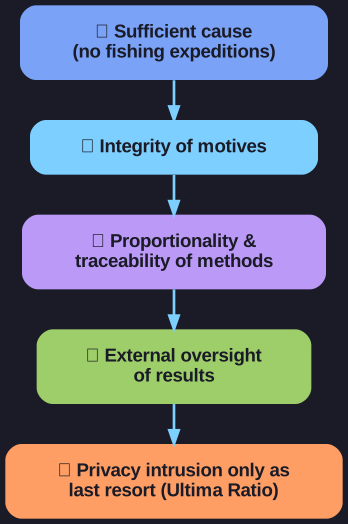
* The five ethical principles, as a gated checklist from justification to last-resort intrusion. *
The five principles explained:
-
Sufficient cause (Zureichende Grunde fur die Recherche) — There must be a legitimate, justified reason to conduct social media research on someone. No fishing expeditions.
-
Integrity of motives (Integritat der Motive) — The investigator's intentions must be genuine and aligned with the stated purpose. No personal vendettas or misuse of authority.
-
Proportionality and traceability (Verhaltnismassigkeit und Nachvollziehbarkeit der Methoden) — Methods used must be proportional to the threat, and every step must be documented and reproducible.
-
External oversight (Aussere Kontrolle der Ergebnisse) — Results and methods should be subject to independent review. No unchecked power.
-
Privacy intrusion as last resort (Uberwindung der Privatheitschranken als Ultima Ratio) — Breaching someone's privacy should only happen when all other avenues have been exhausted.
These principles come from Omand, Bartlett & Miller's 2012 paper "Introducing Social Media Intelligence (SOCMINT)" and are considered a foundational ethical framework for the field. They mirror broader intelligence ethics: just because you can access data doesn't mean you should.
Go deeper:
 Social media intelligence (Wikipedia) — the discipline these ethical principles were written to govern.