After it has decoded the broadcasts and chosen a network, what does the cell selection state machine do, and what makes a cell "suitable" to camp on?
Cell selection is the step where the phone settles ("camps") on one specific cell of the chosen network — the best suitable cell — so it has a fixed home base to register from and to listen for paging on.
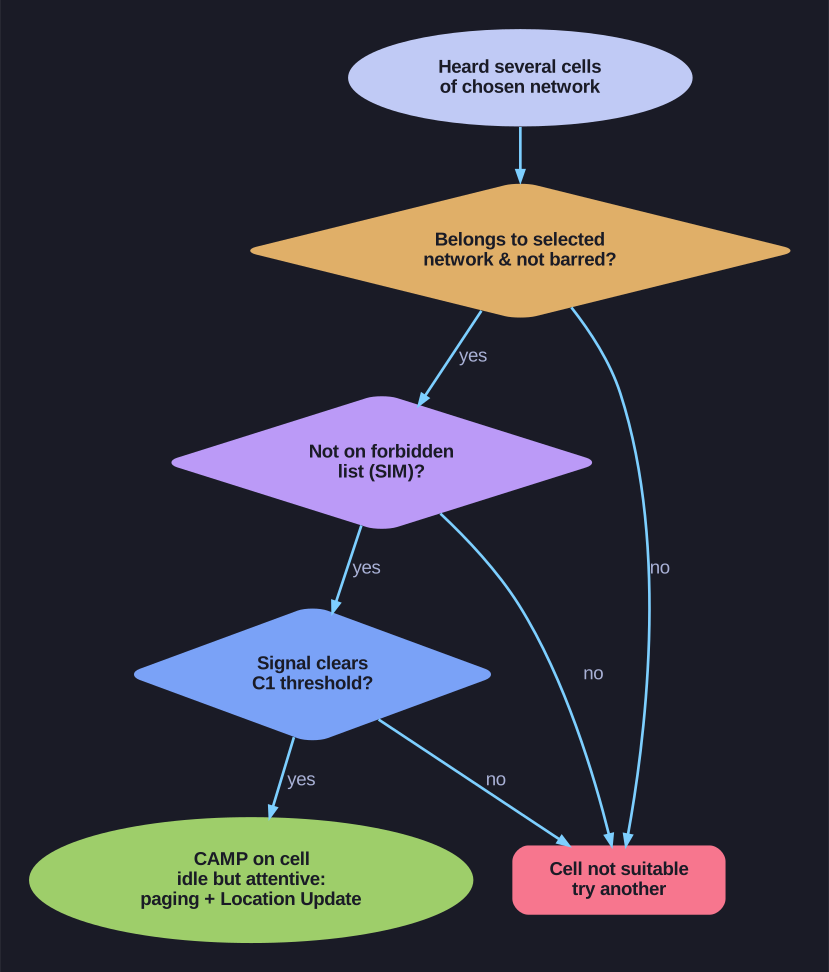
* The suitable-cell test before camping on a cell. *
Where it sits in the sequence: network selection answers which operator; cell selection answers which one of that operator's cells. The phone has usually heard several cells of the same network and must pick exactly one to camp on before it can do anything else.
What "suitable" means (the camping criteria):
- The cell must belong to the selected network (matching MCC/MNC) and not be barred (a cell can broadcast "cell barred" to keep phones off it)
- It must not be on the forbidden list (forbidden location areas / networks stored on the SIM)
- Its received signal must clear a minimum level threshold — in GSM this is the path-loss criterion C1 (and C2 for re-selection ranking), so a barely-audible cell isn't chosen even if it's the only one of that operator
Why "camp"? A camped phone is idle but attentive: it is tuned to that cell's control channels, ready to be paged for incoming calls/SMS and ready to start a Location Update. It also continuously measures neighbours so it can re-select a better cell when you move — that re-selection is exactly what later triggers a NORMAL Location Update if you cross into a new location area.
Tip: Order to remember — find the network (BCCH decode) → camp on a cell (cell selection) → register (Location Update). You can't register before you've committed to a cell.