Compare the three pluggable transports obfs4, Snowflake, and WebTunnel — what does each disguise Tor traffic as, and where does each shine?
obfs4 scrambles traffic into random-looking bytes; Snowflake hides it inside WebRTC (video-call) traffic; WebTunnel wraps it in real HTTPS to a legitimate domain.
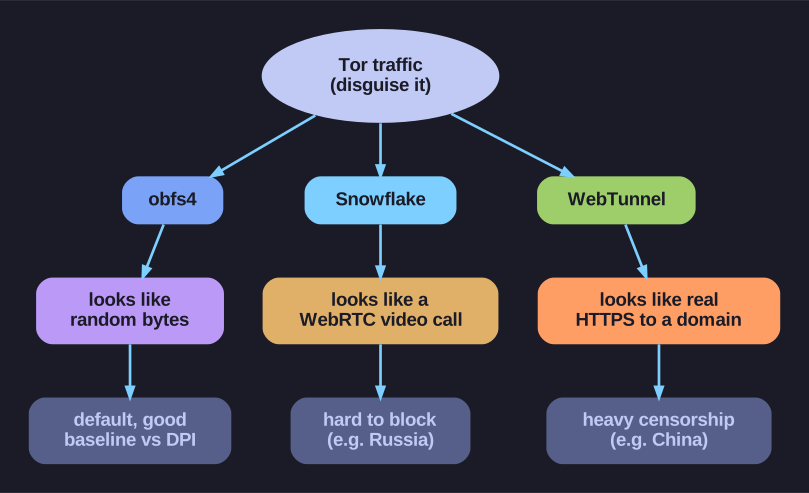
* Pluggable transports — the more it blends into everyday traffic, the harder it is to block. *
| Transport | Disguise | Strengths | Best for |
|---|---|---|---|
| obfs4 | Random, pattern-less bytes | Effective vs DPI, widely deployed, default in Tor Browser | General use, good baseline |
| Snowflake | WebRTC peer connection (like a video call) | Very hard to block, volunteer proxies via browser extension, no fixed server | Countries that allow WebRTC (e.g. Russia) |
| WebTunnel | Real HTTPS request to a legitimate domain | Looks like ordinary HTTPS, very effective vs DPI, actively developed | Heavily censored environments (e.g. China) |
Limitations: obfs4's bridge IP can still be blocked and it's less inconspicuous than HTTPS-based options; Snowflake has higher latency and depends on volunteers; WebTunnel needs a web server with a valid certificate and is still rolling out.
Tip: obfs4 = "looks like noise," Snowflake = "looks like a video chat," WebTunnel = "looks like normal web browsing." The more your cover protocol blends into everyday traffic, the harder it is to block.
Go deeper:
 Snowflake (software) (Wikipedia) — the WebRTC-based transport, one of the three compared.
 Tor bridges & transports (Tor Project) — official descriptions of obfs4, Snowflake and WebTunnel.