Context collapse explains why public data is dangerous in principle. But concretely, how does OSINT threaten individual privacy?
OSINT threatens privacy through four specific vectors: profiling via data correlation, re-identification despite anonymization, location tracking without GPS, and behavioral pattern derivation.
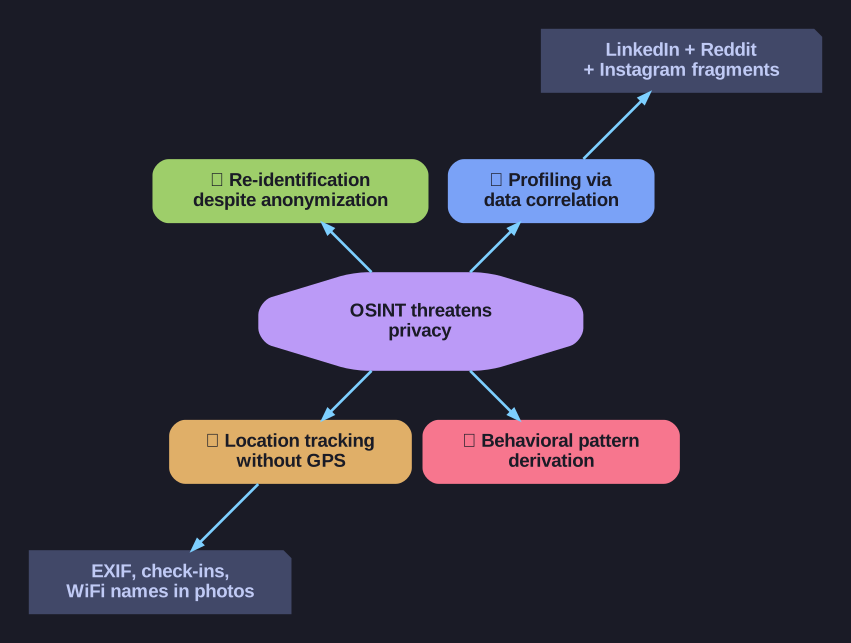
* Four ways OSINT threatens privacy. *
1. Profiling through data correlation. Combining fragments from different sources creates comprehensive profiles. A name from LinkedIn, an employer from a conference website, a hobby from Reddit, a location from Instagram... together these paint a complete picture of someone's life. No single source is sufficient, but the combination is devastating.
2. Re-identification despite anonymization. Researchers have repeatedly demonstrated that supposedly anonymous datasets can be de-anonymized by cross-referencing them with public information. Netflix viewing histories, hospital discharge records, and taxi trip logs have all been re-identified this way.
3. Location tracking without GPS. You don't need GPS data to track someone's movements. Photo metadata contains coordinates. Social media check-ins reveal locations. WiFi network names in the background of screenshots identify neighborhoods. Even architectural details in photos can pinpoint exact addresses.
4. Behavioral pattern derivation. Daily routines, work hours, commute patterns, social relationships, and even emotional states can all be inferred from publicly available data. Someone who posts on Twitter at the same time every morning reveals their wake-up routine. Regular gym check-ins reveal exercise habits and schedule predictability.
Go deeper:
 Data re-identification (Wikipedia) — substantiates the re-identification-despite-anonymization vector.