How are IPv6 addresses structured using hexadecimal?
An IPv6 address is 128 bits written as 32 hex digits, grouped into 8 hextets of 4 hex digits, separated by colons (each hex digit = 4 bits).
IPv6 quadruples IPv4's 32-bit space to 128 bits to escape address exhaustion, and hexadecimal keeps that huge number readable: 4 bits per hex digit × 4 digits = 16 bits per colon-separated hextet, eight of them totalling 128 bits. Knowing the layout lets you reason about prefixes — the first four hextets are typically the network portion, the last four the interface ID.
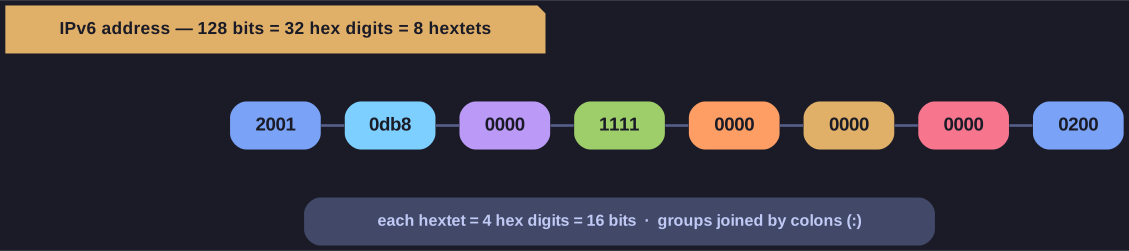
* 8 hextets × 4 hex digits × 4 bits = 128 bits, written in hexadecimal and joined by colons. *
IPv6 Address Structure:
- 128 bits total (vs 32 bits for IPv4)
- Written as 32 hexadecimal digits
- Grouped into 8 hextets (4 hex digits each)
- Separated by colons (:)
Example:
2001:0db8:0000:1111:0000:0000:0000:0200
Each hextet = 16 bits = 4 hex digits
Note: IPv6 can be abbreviated by removing leading zeros and using :: for consecutive groups of zeros.
Go deeper:
 Wikipedia — IPv6 address — the eight-hextet format, zero compression with ::, and address types.