How are Linux system calls invoked on x86_64, and how does the syscall register convention differ from the normal function ABI?
Put the syscall number in %rax, the arguments in %rdi, %rsi, %rdx, %r10, %r8, %r9, then execute syscall; the result returns in %rax. Note arg 4 is %r10, not %rcx.
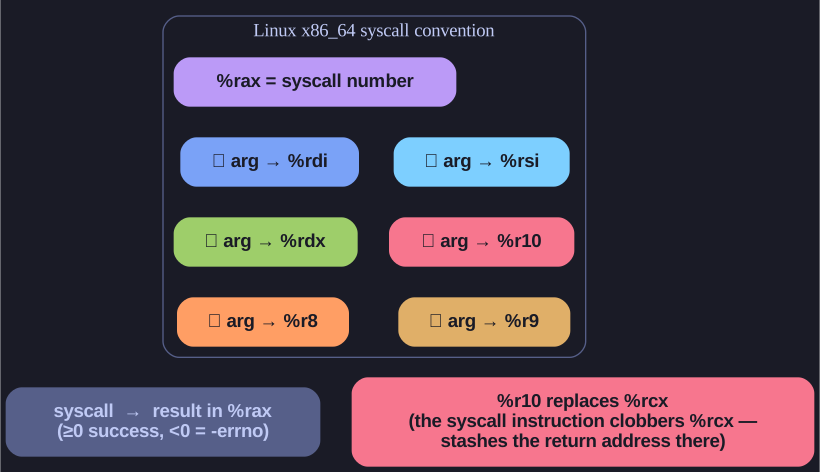
* Syscall number and result in rax; arg 4 uses r10 not rcx because the syscall instruction clobbers rcx. *
A system call is a controlled jump into the kernel. Unlike a normal call, you select the operation with a number in %rax and trigger the syscall instruction:
| Register | Purpose |
|---|---|
%rax |
System-call number (e.g. 1 = write, 60 = exit) |
%rdi |
Argument 1 |
%rsi |
Argument 2 |
%rdx |
Argument 3 |
%r10 |
Argument 4 — not %rcx! |
%r8 |
Argument 5 |
%r9 |
Argument 6 |
%rax |
Return value: ≥0 success, <0 error (negative errno) |
mov  $1, %rax        # syscall 1 = write
mov  $1, %rdi        # fd = 1 (stdout)
lea  msg(%rip), %rsi # buffer
mov  $13, %rdx       # count
syscall              # trap into the kernel
The %r10 quirk: the user-space function ABI uses %rcx for the 4th argument, but the syscall instruction itself clobbers %rcx (it stashes the return address there). So the kernel ABI substitutes %r10 for argument 4. Everything else matches the function ABI.
Note: Normally you don't write this by hand — libc provides wrapper functions (write(), exit()) that set up the registers and issue syscall for you.
Go deeper:
 System call (Wikipedia) — system calls as the kernel interface.
 syscall(2) — Linux manual page — the per-architecture syscall registers and numbers.
- SYSCALL — x86 instruction reference — the SYSCALL instruction itself.