How did Alan Westin define privacy, and what are the three dimensions of privacy?
Privacy is the claim of individuals, groups, and institutions to determine for themselves when, how, and to what extent information about them is communicated to others.
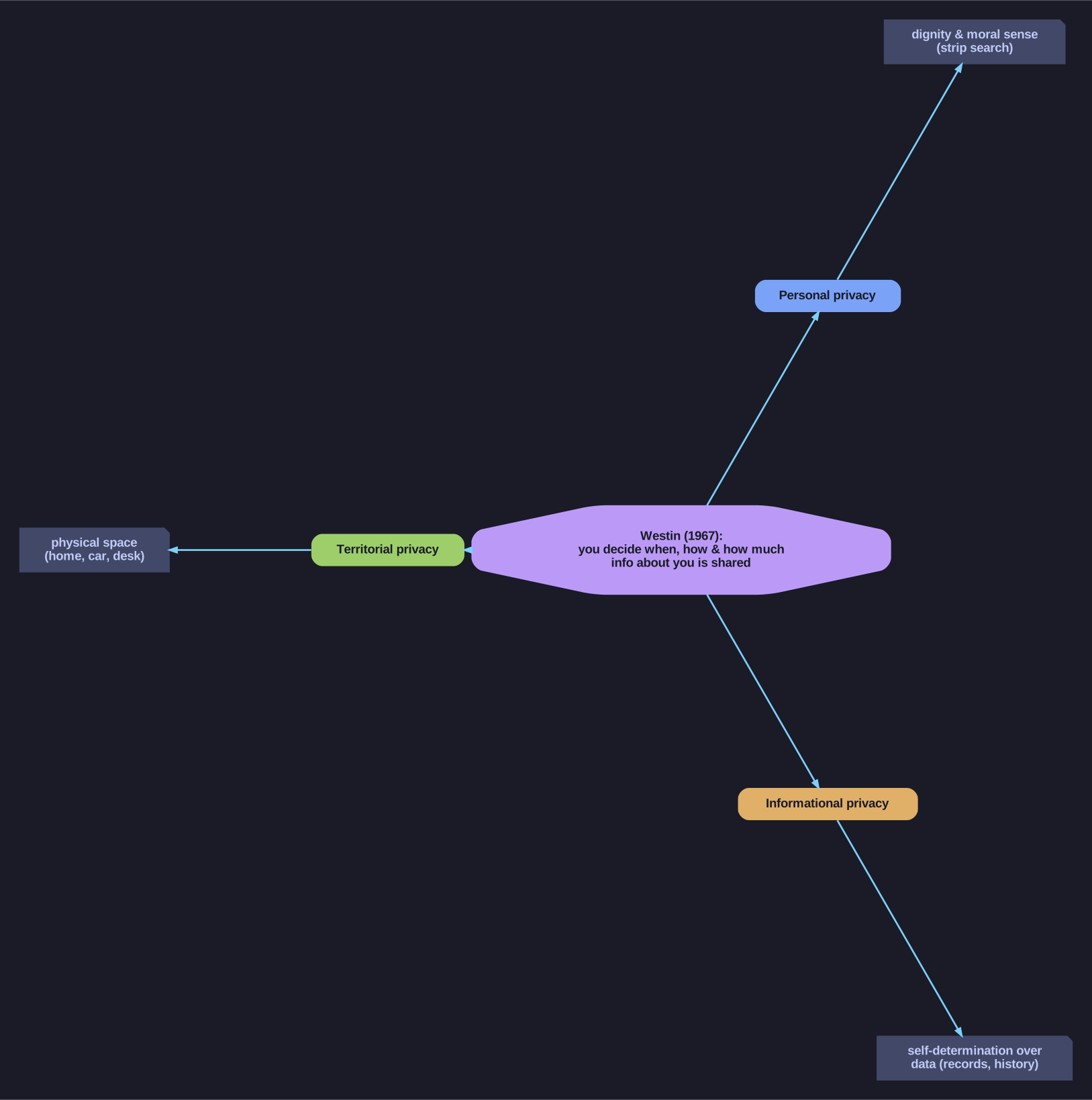
* Westin's three dimensions of privacy: personal, territorial, informational. *
This landmark definition comes from Alan Westin of Columbia University, published in 1967. As of the course (2025-2026) it remains the foundational definition used in privacy law and research.
Westin's definition leads to three dimensions of privacy:
| Dimension | What it protects | Example |
|---|---|---|
| Personal privacy | Protection from intrusions that violate one's moral sense or dignity | Strip searches, invasive questioning |
| Territorial privacy | A physical area around a person that must not be violated without consent | Your home, your car, your desk |
| Informational privacy | Protection against misuse of personal data and the right to informational self-determination | Who can see your medical records, browsing history |
The third dimension, informational privacy, is the one most relevant to data protection law. It's the foundation of modern regulations like the GDPR and the Swiss DSG. The idea of informational self-determination (informationelle Selbstbestimmung) became a central pillar of data protection: every person has the fundamental right to decide who may process what information about them, for what reasons, and when.
Go deeper:
 Information privacy (Wikipedia) — situates Westin's "informational self-determination" in the field.