Quiz Entry - updated: 2026.07.30
How do k-anonymity, l-diversity, and t-closeness relate as a "layered defense"?
They nest: k hides individuals in a crowd, l ensures the crowd holds varied secrets, t proves the crowd reflects reality — each a stricter superset of the last.
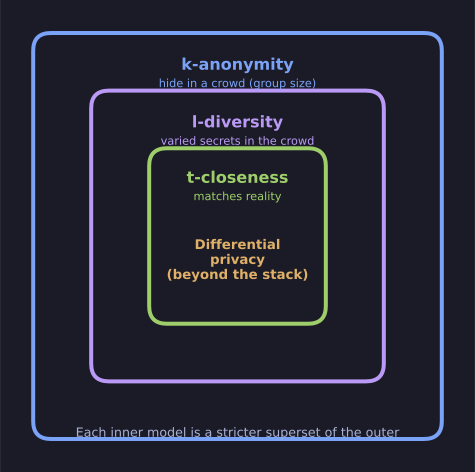
* The nested rings: each inner model is a stricter superset of the outer. *
True structural database security comes from layering, not picking one model. Think of three nested rings:
- k-Anonymity (outer) — hide the individual in a crowd (group size).
- l-Diversity (middle) — ensure the crowd holds varied sensitive values (attribute variance).
- t-Closeness (inner) — prove each crowd's value distribution matches the real world (distribution alignment).
Each inner model presupposes the outer one and adds a stricter constraint. A t-close dataset is also l-diverse and k-anonymous. The natural next step beyond this stack is differential privacy.
Tip: Group size → variety of secrets → shape of secrets. Three questions, three rings, each tighter than the last.