How do mechanical combination locks (Zahlenschlösser) work, and how old is the concept?
Combination locks have existed for ~1000 years (Arab world, then China, then Europe in the 16th century). Modern mechanical versions use rotating discs with a notch: when every disc's notch lines up, a spring-loaded bar (Funktionsriegel) drops into the gap and releases the bolt.
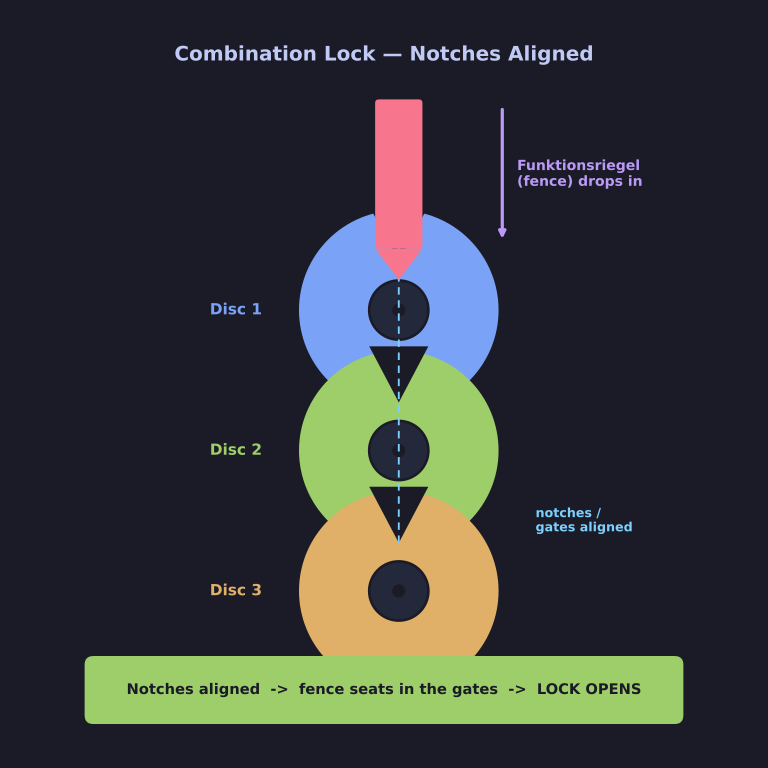
* Combination lock — aligned disc notches let the fence seat and open the lock. *
Why each digit you turn works:
- Each digit corresponds to one disc.
- Turning the dial rotates the discs in sequence (via a clutch system).
- The order matters because each disc engages the next only after a full rotation past the previous one.
Two flavors you'll meet:
| Type | Where | Example |
|---|---|---|
| Padlock-style | Bicycle locks, gym lockers | 4 small wheels you set by thumb |
| Dial combination | Safes, safe-deposit boxes | A single rotating dial; each digit = one full revolution stop |
Historical note: The "Buchstabenschloss" (letter lock, England, 17th century) was a marketing revival — same mechanism, but the discs were engraved with letters so you could set a word as your combination instead of a number. Conceptually identical to today's TSA-approved suitcase locks.
Tip: All-mechanical combination locks have a fundamental weakness — decoding by feel. With practice (or amplification tools), you can detect the slight resistance change as each disc's gate aligns. This is what safecrackers in old movies are doing with the stethoscope.
Go deeper:
 Combination lock — diagrams of the notched rotating discs and the history from the Roman Kerameikos lock to al-Jazari's 1206 device.