Quiz Entry - updated: 2026.07.30
How do RSTP (Rapid Spanning Tree Protocol) port states and port roles differ from classic STP (Spanning Tree Protocol)?
RSTP simplifies 5 port states to 3, and splits the "blocked" role into alternate and backup ports.
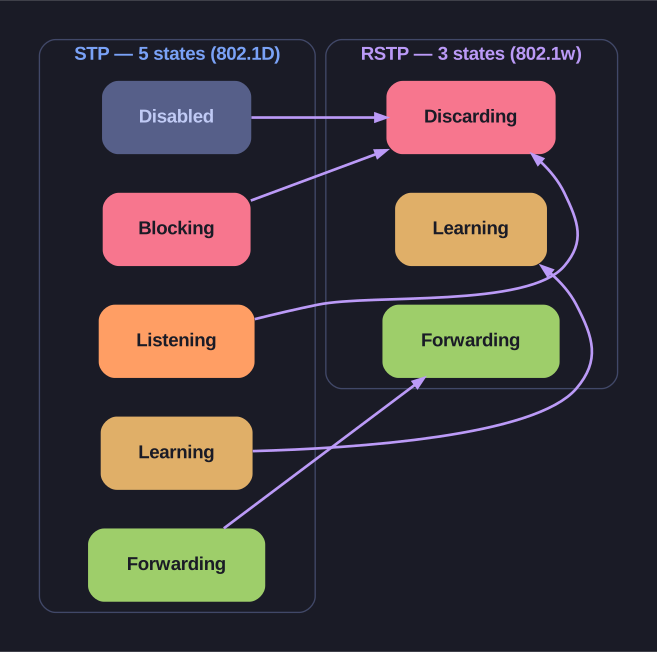
* RSTP collapses five STP states into three. *
Port States — STP vs. RSTP:
| STP (5 states) | RSTP (3 states) |
|---|---|
| Disabled | Discarding |
| Blocking | Discarding |
| Listening | Discarding |
| Learning | Learning |
| Forwarding | Forwarding |
RSTP merges disabled, blocking, and listening into a single discarding state — the port isn't forwarding data in any of these cases, so there's no need to distinguish between them.
Port Roles — STP vs. RSTP:
| STP | RSTP |
|---|---|
| Root Port | Root Port |
| Designated Port | Designated Port |
| Blocked Port (non-designated) | Alternate Port |
| — | Backup Port |
- Alternate port = backup path to the root bridge (on a different switch)
- Backup port = backup to a shared medium like a hub (same switch, rare today)
Go deeper:
 RSTP operation — Spanning Tree Protocol (Wikipedia) — maps the five STP states onto three RSTP states and adds alternate/backup roles.