How do the M-flag and O-flag in a Router Advertisement steer IPv6 autoconfiguration?
The RA's M-flag ("Managed") says "get your address from DHCPv6"; the O-flag ("Other config") says "use SLAAC for the address but get other settings from DHCPv6".
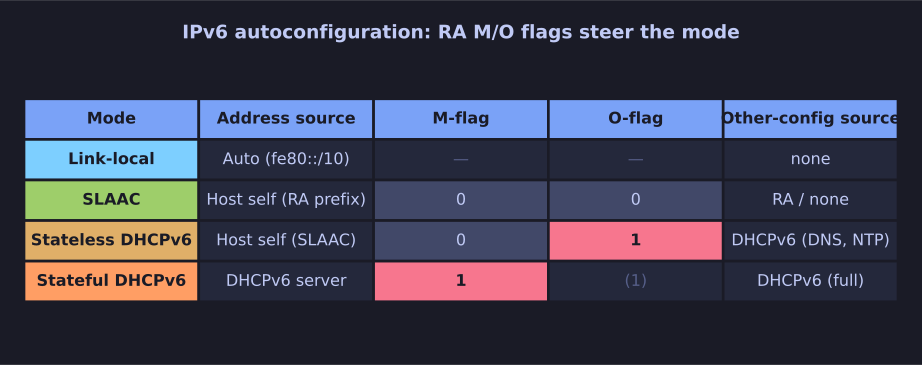
* IPv6 autoconfiguration modes and how the RA M/O flags select each. *
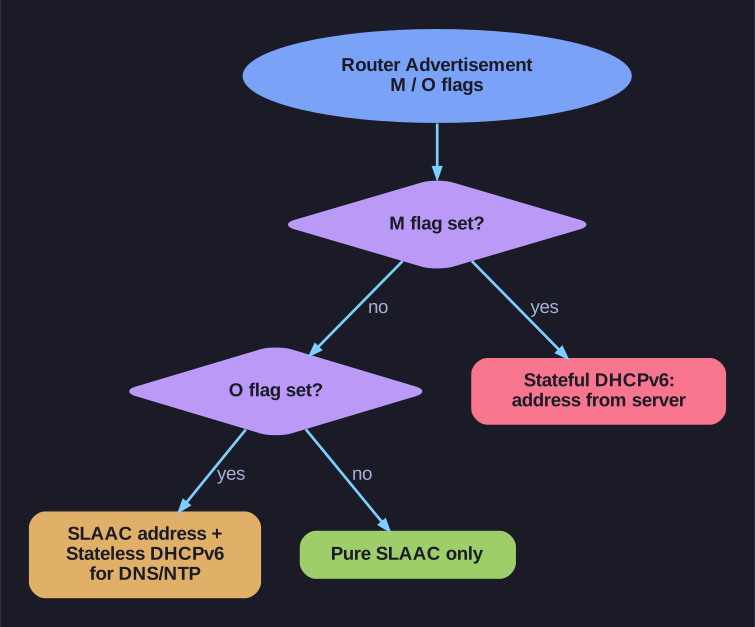
* RA M/O flags decide the host's configuration strategy. *
A Router Advertisement carries flags that tell hosts how to configure:
| Flag | Set meaning |
|---|---|
| M (Managed) | Use stateful DHCPv6 for the address (and config) |
| O (Other) | Use SLAAC for the address, but fetch other info (DNS, NTP…) via stateless DHCPv6 |
| neither set | Pure SLAAC only |
So the router announces the policy and the hosts obey — which is why the same network can be configured for SLAAC-only, stateless DHCPv6, or full stateful DHCPv6 just by changing RA flags.
Tip: Spot them in a packet capture of a Router Advertisement — M and O are single bits but they decide the host's entire configuration strategy.