How do the "two pens" and "red/green card" intuitions illustrate zero-knowledge proofs?
Both let a prover convince a verifier they can tell two things apart (or know a secret) — through repeated challenges (the pens) or by elimination (the cards) — while the verifier learns nothing about the distinction itself.
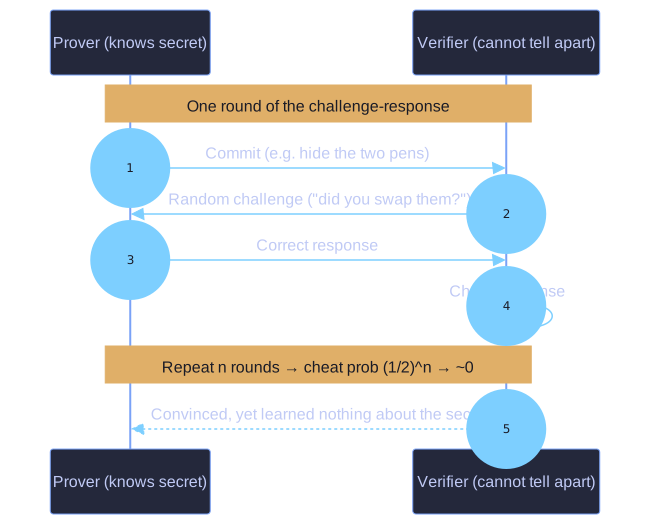
* One commit-challenge-response round; repetition convinces the verifier without revealing the secret. *
In the two-pens intuition, a colour-blind verifier holds two pens that look identical to them but are different colours. The prover (who can see colour) is repeatedly asked "did I swap them?" and always answers correctly. After many rounds the verifier is convinced the pens really differ — but never learns which is which.
The red card intuition makes the same point by elimination: the prover holds one secret card from a 52-card deck and, to prove it is red without revealing its rank or suit, reveals all 26 black cards from the rest of the deck. If every black card is accounted for, the hidden card must be red — yet the verifier still learns nothing about which red card it is.
Why this matters: A single round could be a lucky guess. The interaction repeated many times is what drives the cheating probability toward zero — this is the heart of soundness.