Quiz Entry - updated: 2026.07.30
How do unicast, multicast, and anycast differ in where a packet ends up?
Unicast → one specific node; multicast → every node that joined the group; anycast → exactly one node (the topologically nearest of several sharing the address).
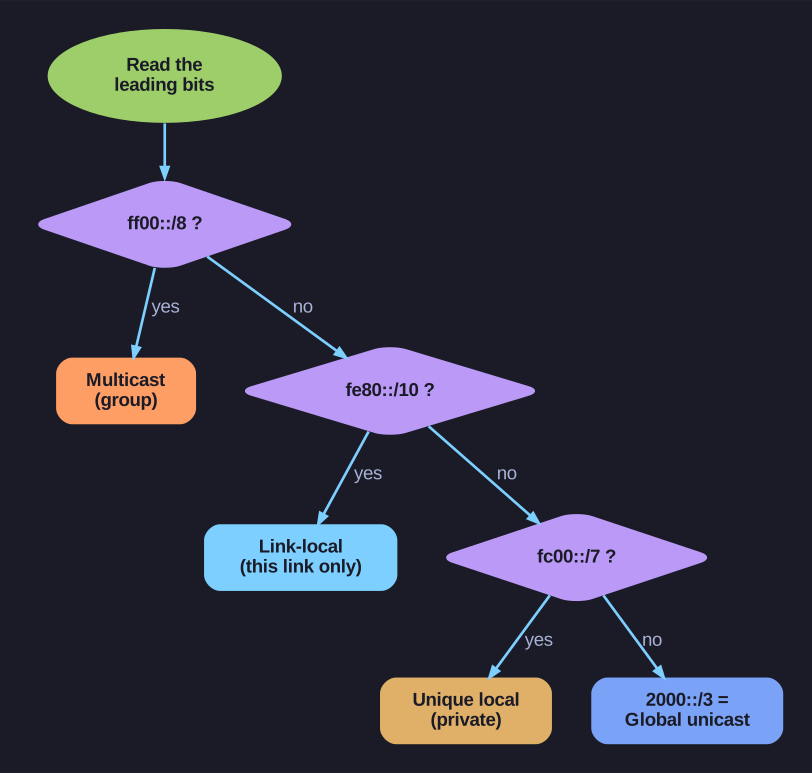
* Reading the leading bits to classify an IPv6 address by type. *
Think of one source sending to a destination address:
- Unicast: the address belongs to a single interface → one delivery.
- Multicast: the address identifies a group; the network duplicates the packet so each group member receives a copy.
- Anycast: several interfaces are configured with the same address; routing delivers the packet to just one — whichever is "closest" in routing terms. The other group members get nothing.
The subtle distinction is anycast vs. multicast: both involve multiple nodes sharing an address, but anycast delivers to one of them, multicast to all of them.
Tip: Anycast = "send to any one of you, I don't care which" — perfect for stateless services where any server can answer.
Go deeper:
 RFC 4291 §2 — IPv6 Addressing Architecture — formal definitions of unicast, anycast and multicast delivery semantics.