How do you convert a decimal number to hexadecimal using the module's binary-grouping method?
Convert the decimal to 8-bit binary, split it into two nibbles (groups of 4), then turn each nibble into its hex digit. Example: 168 → 10101000 → 1010 1000 → A8.
The module routes decimal through binary instead of dividing by 16, because the binary step is the part you already practice for subnetting — and since one hex digit is exactly one nibble, the grouping does the rest for free. This is how you'd hand-write an IPv6 hextet or a MAC byte from a decimal value. Gotcha: split the nibbles from the right, and pad to a full 8 bits first so each octet always yields two hex digits.
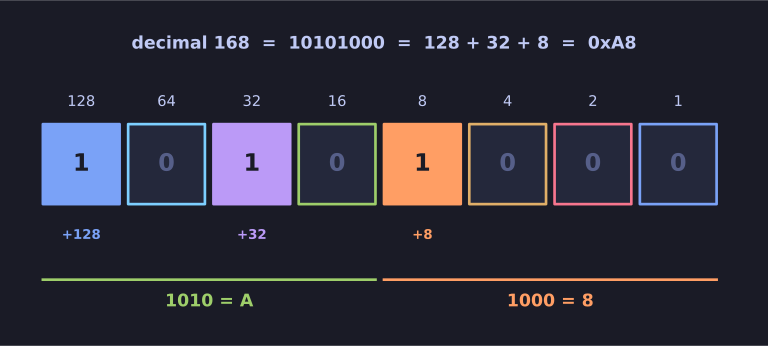
* 168 → 10101000 → nibbles 1010 (A) and 1000 (8) → 0xA8. *
Decimal to Hexadecimal (module's 3-step method via binary):
- Convert the decimal number to an 8-bit binary string
- Split the binary into groups of four, starting from the right
- Convert each 4-bit group to its hex digit
Example: Convert 168 to hex
- 168 in binary is 10101000
- Split into nibbles: 1010 and 1000
- 1010 = A, 1000 = 8
Result: 168 = A8
Why it works: because each hex digit equals exactly 4 binary bits, grouping the binary directly gives the hex digits.
Go deeper:
 RapidTables — decimal to hex converter — check your nibble grouping against the tool for any value.