Quiz Entry - updated: 2026.07.30
How does a basic password-based login protocol work, and what does the server actually store?
Setup: client sends password once, server stores its hash. Login: client sends password, server hashes and compares with the stored hash.
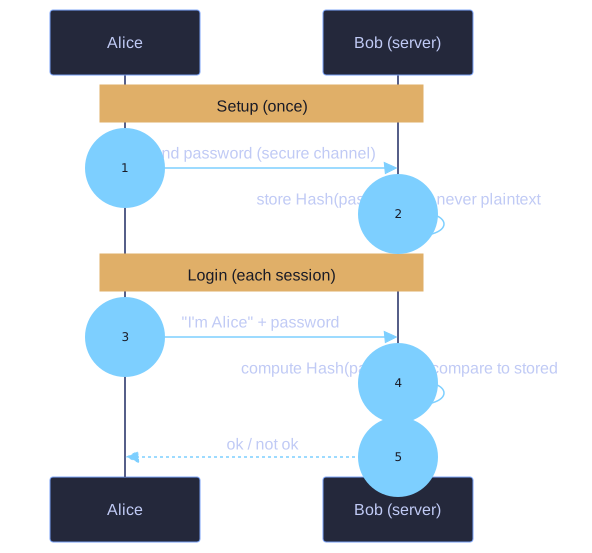
* Setup stores only Hash(password); each login re-hashes the supplied password and compares. *
The two phases:
Setup phase (one-time):
- Alice sends her password to Bob's server over a secure channel.
- Bob computes
Hash(password)and stores only the hash — never the plaintext password.
Login phase (every session):
- Alice sends
"I'm Alice, <password>". - Bob computes
Hash(password)on the received value. - Bob compares with the stored hash — if equal, login succeeds (ok); otherwise it fails (not ok).
Why hash, not the password itself:
- If Bob's database is leaked, the attacker has hashes, not passwords. They still need to brute-force each one.
- Modern practice: use a slow salted hash function (bcrypt, scrypt, Argon2) — the slowness makes brute-forcing each password expensive.
Weak spot: the password still travels to the server in plaintext during login. This is why TLS is non-negotiable: it protects the channel. Challenge-response protocols (next cards) eliminate even this exposure.
Go deeper:
 OWASP Password Storage Cheat Sheet — why to store a salted, slow hash (Argon2id, bcrypt, scrypt) and never the plaintext.