How does a device decide which MAC address to look up in its ARP table?
If the destination IP is on the same network, the device looks up the destination's own IPv4 address; if it is on a different network, it looks up the default gateway's IPv4 address. A miss triggers an ARP request.
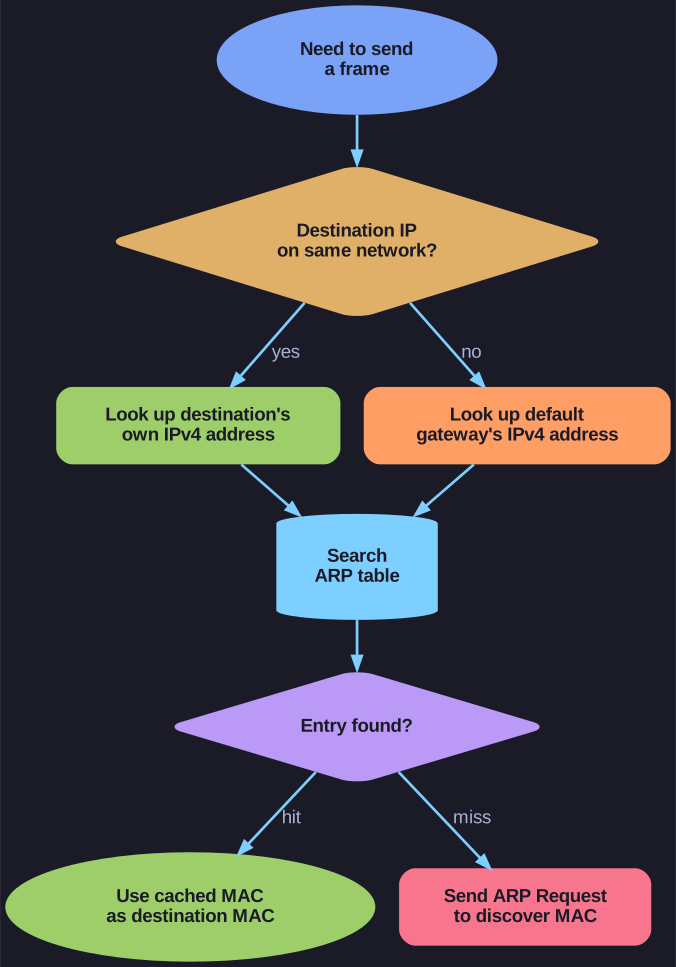
* Same network: resolve the destination's own IP. Different network: resolve the gateway's IP. Either way, an ARP-table miss triggers an ARP request. *
ARP table lookup decision:
To send a frame, a device searches its ARP table for a destination IPv4 address and corresponding MAC address.
| Destination Location | ARP Table Search For |
|---|---|
| Same network | The destination device's IPv4 address |
| Different network | The default gateway's IPv4 address |
ARP lookup process:
- If IPv4 address is found → Use the corresponding MAC address
- If IPv4 address is NOT found → Send an ARP Request to discover it
Key insight: For remote destinations, the device doesn't need (and can't get) the final destination's MAC address - it only needs the gateway's MAC to forward the packet off the local network.
Go deeper:
-
 Address Resolution Protocol — Wikipedia: a host consults its ARP cache first and only issues a request on a miss.
 -
Traditional ARP — PracticalNetworking shows the target-vs-destination distinction that drives whether the host resolves the host's IP or the gateway's.