Quiz Entry - updated: 2026.07.30
How does a host decide where to send a packet (forwarding decision)?
A host sends to one of three places: itself (loopback), a local host (directly, same network), or a remote host (via the default gateway).
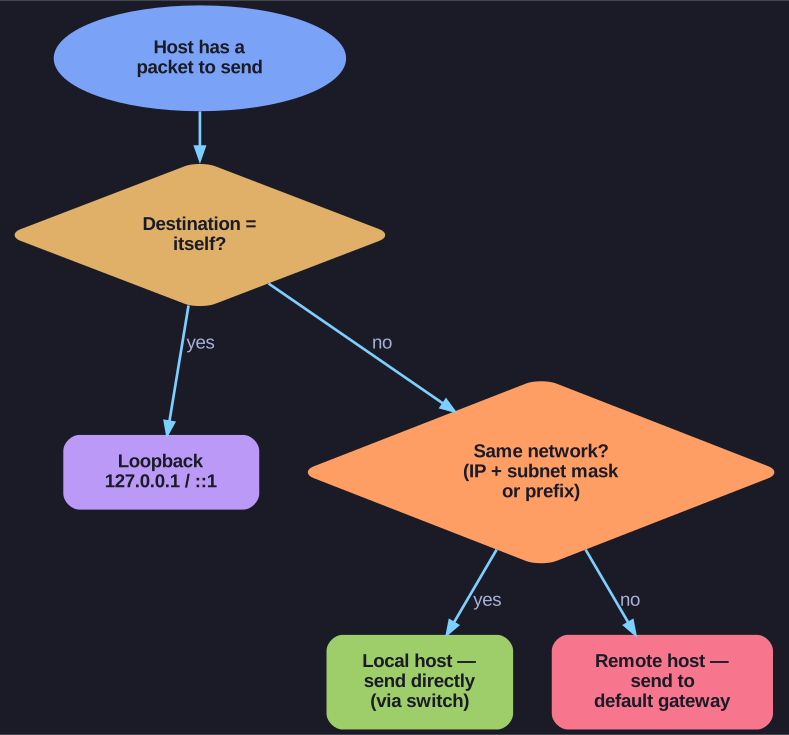
* The host compares destination against its own address, then its subnet — local hosts get direct delivery, remote ones go to the default gateway. *
Host Forwarding Decision:
A host can send packets to three types of destinations:
| Destination | Description | How to Reach |
|---|---|---|
| Itself | Loopback address | IPv4: 127.0.0.1, IPv6: ::1 |
| Local Host | On the same LAN/network | Send directly (same network) |
| Remote Host | On a different network | Send to default gateway |
Determining Local vs Remote:
- IPv4: Host uses its own IP address and subnet mask, along with destination IP
- IPv6: Host uses network address and prefix advertised by the local router
Key rule:
- Local traffic → Sent out host interface to be handled by an intermediary device (switch)
- Remote traffic → Forwarded directly to the default gateway (router)
Go deeper:
 PracticalNetworking — Host-to-Host through a Router — local vs remote delivery and what changes at each hop.
- Wikipedia — Default gateway — the role of the gateway when no specific route matches.