How does a person search (Notsuche & Fahndung) locate a target, and what is the crucial caveat about what is actually being located?
It targets one SIM and uses a "silent" (empty) SMS to test whether the device is currently active: if yes, it returns the antenna the device is currently on; if no, the last antenna it was connected to. The crucial caveat: it locates the device, not the person.
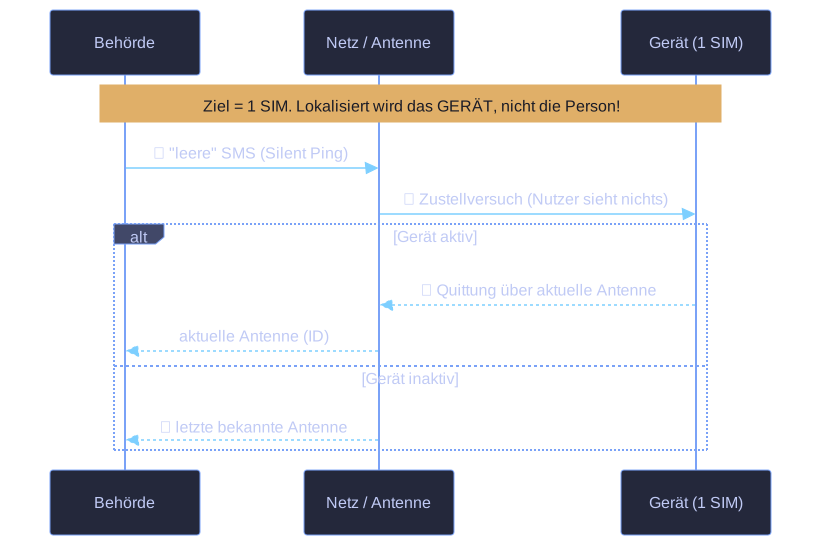
* Der Silent-SMS-Ping lokalisiert das Geraet, nicht die Person. *
The same mechanism serves both legal flavours of person search — Notsuche (emergency search for a missing/endangered person) and Fahndung (manhunt for a wanted convicted person). It targets one SIM and works as a simple decision:
- Send an "empty" SMS — a silent ping the user never sees — to test whether the device is currently active.
- If the device responds: the network reports which antenna it is currently on.
- If it does not: the network reports the last antenna it was connected to.
Either way the output is a cell, not a coordinate.
The caveat cannot be overstated:
It is not the person that is located, but the device!
This matters enormously in forensics and in court, because the step from "device is at location X" to "suspect is at location X" is an assumption, not a fact. The phone could have been left at home, lent out, stolen, or deliberately planted. Conflating device location with person location is a classic legal pitfall: the evidence genuinely supports a statement about the device, and bridging to the person needs separate justification every time.
Tip: A silent/empty SMS is the standard trick to make a phone reveal its current cell without alerting the user. And always say "the device was here," never "the person was here."
Go deeper:
 Silent SMS (Wikipedia) — the Type-0 stealth-ping SMS that forces a phone to reveal its serving cell with no user-visible notification.
- Cell-phone tracking (EFF) — the surveillance and legal angle on covertly locating phones through the cell network.