How does a switch forward frames? (The "Forward" process)
By looking up the DESTINATION MAC: a known unicast is sent out only that one port (filtering); an unknown unicast, a broadcast, or a multicast is flooded out every port except the one it arrived on.
Where learning uses the source address, forwarding uses the destination MAC (Media Access Control) address. The switch reads the destination, searches its MAC address table, and acts on whether it finds a match:
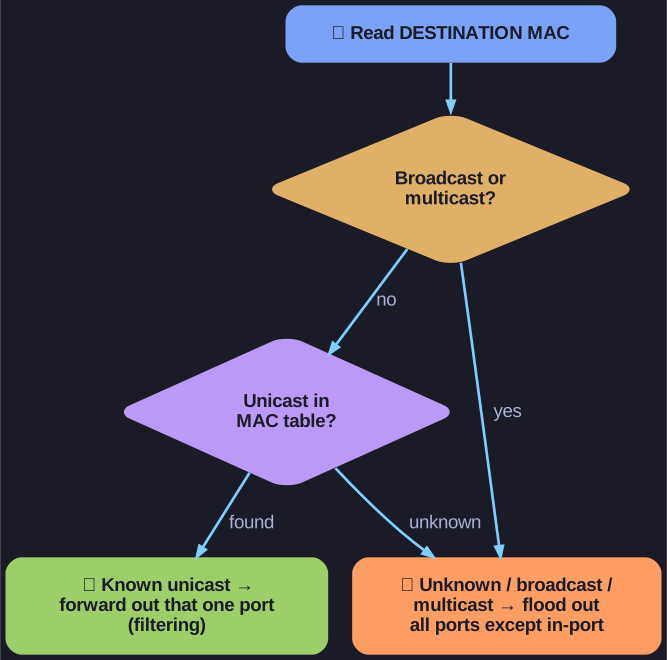
* A known unicast is sent out only its one port (filtering); an unknown unicast, broadcast, or multicast is flooded out every port except the one it arrived on. *
- Destination found → forward the frame out only that one port. This is called filtering: by keeping the frame off all the other ports, only the intended recipient sees it.
- Destination not found ("unknown unicast") → the switch can't know where it lives, so it floods the frame out every port except the incoming one and lets the real owner answer (which then teaches the switch its port).
- Broadcast or multicast destination → always flooded out all ports except the incoming one, since by definition more than one device may need it.
Why it matters: flooding looks wasteful, but it is rare and temporary — as the table fills, the switch floods less and filters more. That selective delivery is the core reason a switch outperforms a hub, which blindly repeats every frame to every port all the time.
Go deeper:
-
 Host to Host through a Switch — Practical Networking — when a switch filters a known unicast versus floods an unknown one.
 -
Network switch (Wikipedia) — selective forwarding by MAC versus a hub repeating to every port.