Quiz Entry - updated: 2026.07.30
How does direct routing differ from indirect routing, and what is its trade-off?
In direct routing, the correspondent learns the care-of address and sends directly to the visited network — more efficient but not transparent to the correspondent.
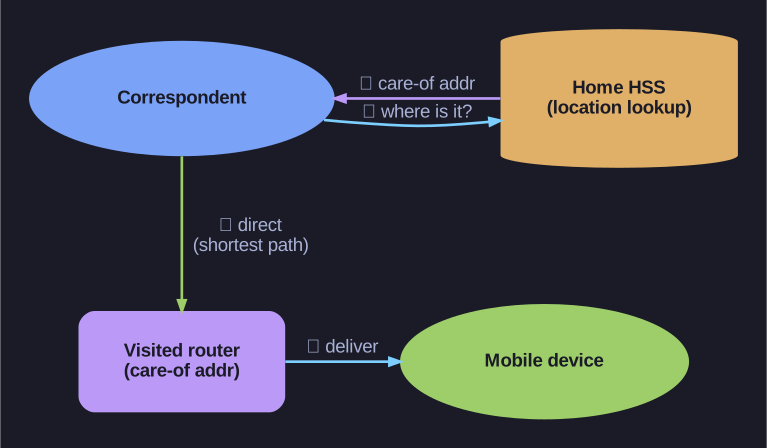
* Direct routing: query the HSS for the care-of address, then send direct. *
How it works:
- The correspondent contacts the home HSS to ask: "Where is this device right now?"
- The HSS replies with the device's current care-of address in the visited network
- The correspondent sends data directly to the visited network
- The visited network router delivers it to the mobile device
Advantages:
- Eliminates the triangle routing inefficiency — data takes the shortest path
- Lower latency, better performance
Disadvantages:
- Not transparent to the correspondent — it must actively query the home agent and handle care-of addresses
- Complexity when the device moves again — if the device leaves the visited network, the correspondent has stale routing info and must re-query
- Manageable, but adds complexity
Tip: Think of it like this — indirect routing is like always mailing letters to someone's parents' house and having them forward it. Direct routing is like calling the parents to ask for the current address and mailing directly. Faster, but you need to check again if they move.
Go deeper:
 RFC 5944 — IP Mobility Support for IPv4 (IETF) — the spec behind querying the home agent for the care-of address and the stale-binding problem when the device moves again.