How does Google's Topics API enable interest-based advertising without cross-site tracking?
The browser locally derives 3–5 weekly interest "topics" from your browsing (from ~350 predefined categories), stores them for only 3 weeks, and shares only a topic — not an identifier — with sites via document.browsingTopics().
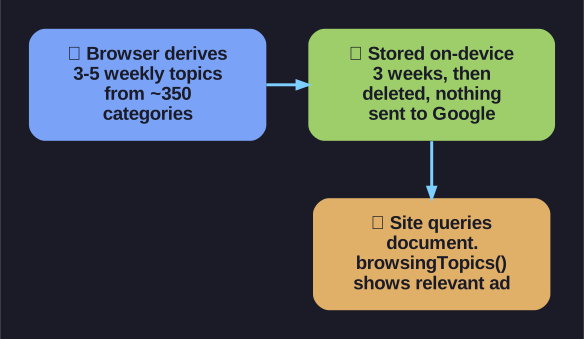
* The Topics API flow: interests derived and held on-device, only a topic label shared. *
How it works:
- Topic derivation — the browser picks 3–5 main interests per week from ~350 categories (Sport, Tech, Travel…), based on your surfing
- Privacy & control — topics are stored locally for only 3 weeks, then auto-deleted; nothing is sent to Google servers; users can view, delete topics, or disable the API
- Ad delivery — sites query current topics via
document.browsingTopics()and show relevant ads
Example: you visit cooking blogs → the browser assigns "Cooking" → a shopping site shows kitchen-appliance ads — without anyone tracking you across sites.
The key shift: instead of a unique cross-site identifier, advertisers get a coarse interest label generated and controlled on-device. (Caveat — see the cookieless-future card: research shows Topics can still contribute to re-identification when combined with fingerprinting.)
Go deeper:
 Privacy Sandbox — Topics API (Wikipedia) — the Topics proposal within Google's interest-based-ad replacement.