How does GSM route an incoming call to a roaming mobile subscriber (indirect routing)?
The call is first routed to the subscriber's home network; the home MSC consults the HLR to obtain a roaming number for the mobile in the visited network, then sets up a second call leg to the visited MSC, which completes the call through the local base station.
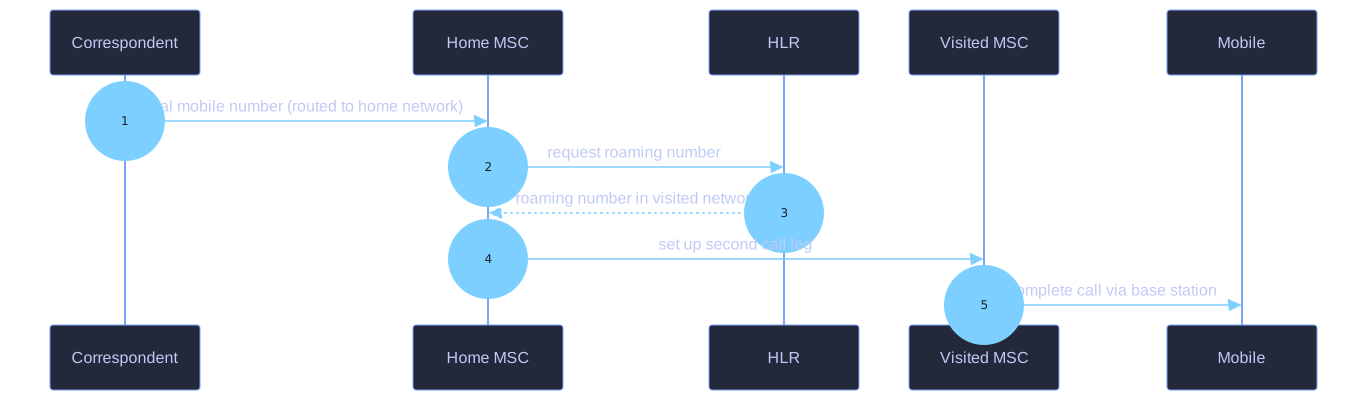
* GSM indirect routing: home MSC gets a roaming number, then a second leg. *
The setup: different cellular networks, operated by different providers, are interconnected via the wired public telephone network — each network's MSCs form the bridge.
The four steps of GSM indirect routing:
- Call routed to home network — the correspondent dials the mobile number; the PSTN routes the call to the subscriber's home MSC (the number identifies the home network, not the current location)
- Home MSC consults the HLR — and gets the roaming number of the mobile in the visited network (the HLR knows the current location because of registration)
- Home MSC sets up the second leg of the call to the MSC in the visited network
- The visited MSC completes the call through the base station to the mobile
The "indirect" part: even if the correspondent stands next to you in Rome, the call still travels via your Swiss home network first — the classic triangle-routing cost of indirect routing, traded for simplicity (the caller needs to know nothing about your location).
Tip: This is the GSM-concrete version of the generic home-agent/foreign-agent model: HLR + home MSC = home agent role, VLR + visited MSC = foreign agent role.
Go deeper:
 Network switching subsystem (Wikipedia) — the GMSC querying the HLR for a roaming number (MSRN) to set up the second call leg.