Quiz Entry - updated: 2026.07.30
How does HTML5 Canvas fingerprinting work, and why does identical code produce device-unique results?
A site draws hidden text/graphics on an HTML5 canvas; tiny rendering differences (GPU, drivers, anti-aliasing, font rendering) make the resulting image — and its hash — unique per device.
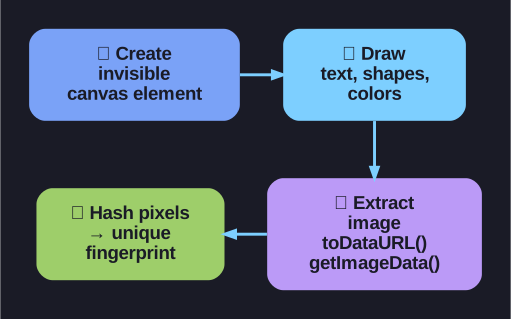
* The four steps of canvas fingerprinting. *
Why identical JavaScript yields different images: the same draw instructions render slightly differently depending on:
- Graphics card & drivers
- Image-processing engines
- Anti-aliasing
- Font rendering
The four steps:
- Create an invisible canvas element via JavaScript
- Draw complex text, shapes, colors, and emojis
- Extract the image data (
toDataURL()/getImageData()) - Hash the pixel data into a unique fingerprint
Effectiveness: ~15–20 bits of entropy on its own; combined with other fingerprinting techniques, over 99% uniqueness.
Tip: Watch for calls to toDataURL() and getImageData() in DevTools to spot fingerprinting scripts; test yours at BrowserLeaks Canvas Test.
Go deeper:
 Canvas fingerprinting (Wikipedia) — the HTML5-canvas rendering-difference technique as a cookieless tracker.