Quiz Entry - updated: 2026.07.30
How does ICMPv6 Neighbor Solicitation/Advertisement work for address resolution?
To find a neighbor's MAC, a device sends an NS (carrying the target IPv6 address) to the solicited-node multicast address; the owner of that address replies with an NA containing its MAC. This replaces IPv4 ARP.
ICMPv6 Address Resolution (NS/NA):
ICMPv6 uses Neighbor Solicitation and Neighbor Advertisement messages to resolve IPv6 addresses to MAC addresses (replacing ARP from IPv4).
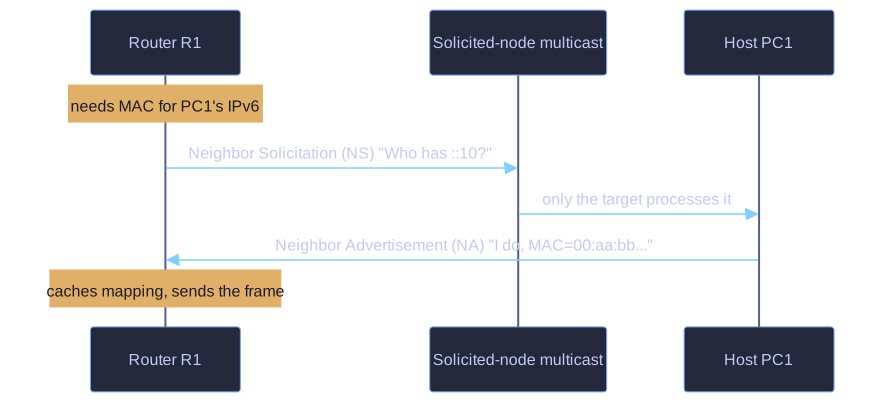
* The requester multicasts an NS for the target IPv6; only the owner answers with an NA giving its MAC — more targeted than IPv4 ARP broadcasts. *
Process:
Router R1                         Host PC1
(needs MAC for PC1)              (2001:db8:acad:1::10)
     │                               │
     │─── NS: "Who has ::10?" ──────→│
     │    (to solicited-node multicast)
     │                               │
     │←── NA: "I do! MAC=00:aa:bb..."│
     │                               │
Steps:
- R1 needs to send a frame to PC1's IPv6 address
- R1 sends NS to the solicited-node multicast address
- NS includes the target IPv6 address
- PC1 recognizes its address and responds with NA
- NA contains PC1's MAC address
- R1 caches the mapping and sends the frame
Key difference from ARP:
- ARP uses broadcast (all hosts process)
- ICMPv6 NS uses solicited-node multicast (only target processes)
- More efficient than broadcast
Go deeper:
 RFC 4861 — Neighbor Discovery for IP version 6 (IPv6) — defines NS/NA address resolution and the solicited-node multicast mechanism.
- Neighbor Discovery Protocol — Wikipedia — how NS/NA replaces ARP for IPv6 link-layer resolution.