Quiz Entry - updated: 2026.07.30
How does indirect routing work in mobile networks, and what is its main disadvantage?
In indirect routing, all traffic first goes to the home network, which then tunnels it to the visited network — simple but inefficient due to "triangle routing."
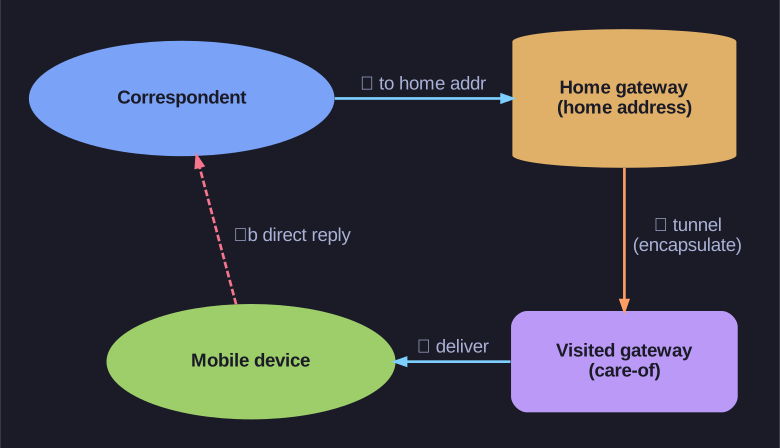
* Indirect routing: traffic detours via the home gateway (triangle routing). *
How it works:
- The correspondent sends data to the device's home address (permanent address)
- The home gateway receives the datagram
- The home gateway encapsulates it and tunnels it to the visited network gateway
- The visited network gateway delivers it to the mobile device
- Responses can go back via the home network (4a) or directly to the correspondent (4b)
Disadvantage — Triangle routing:
- Data always detours through the home network, even if the correspondent is geographically close to the visited network
- Example: Two people in the same city on different networks — traffic still routes through a home network possibly on another continent
Advantages:
- Transparent to the correspondent — they just send to the home address, no special logic needed
- No connection drop when moving between visited networks — the device re-registers, and traffic automatically follows
- Existing TCP connections survive handovers because the home address stays constant
Go deeper:
 Mobile IP (Wikipedia) — the home agent encapsulating and tunneling datagrams to the care-of address, and the triangle-routing detour this causes.