How does the DHCPv6 message exchange compare to the DHCPv4 DORA process?
DHCPv6 mirrors DORA with four messages — SOLICIT, ADVERTISE, REQUEST, and REPLY — but it does not hand out a default gateway; that must come from the router's Router Advertisement.
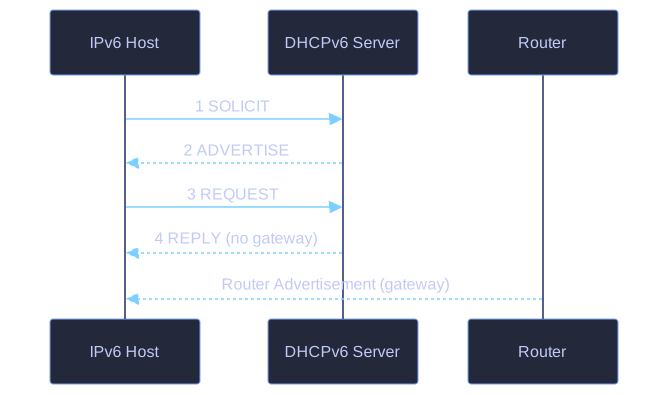
* Stateful DHCPv6 is SOLICIT, ADVERTISE, REQUEST, REPLY — mirroring DORA — but the REPLY carries no default gateway; the host learns its gateway from the router's Router Advertisement. *
DHCPv6 messages (vs DHCPv4 DORA):
| DHCPv4 (DORA) | DHCPv6 |
|---|---|
| DISCOVER | SOLICIT |
| OFFER | ADVERTISE |
| REQUEST | REQUEST |
| ACK | REPLY |
(DHCPv6 also defines an INFORMATION REQUEST message used to obtain configuration parameters without a leased address.)
Key gotcha: DHCPv6 provides similar services to DHCPv4 but does not provide a default gateway address. An IPv6 host can only learn its default gateway dynamically from the Router Advertisement (RA) message sent by the router.
Go deeper:
-
 DHCPv6 (Wikipedia) — the SOLICIT/ADVERTISE/REQUEST/REPLY messages and the stateful vs stateless modes alongside SLAAC.
 -
RFC 8415 — Dynamic Host Configuration Protocol for IPv6 — the authoritative DHCPv6 standard defining the client/server message exchange.