How does the NIST CSF connect the different organizational levels in risk management?
It creates a feedback loop across three levels: Senior Executive, Business/Process, and Implementation/Operations.
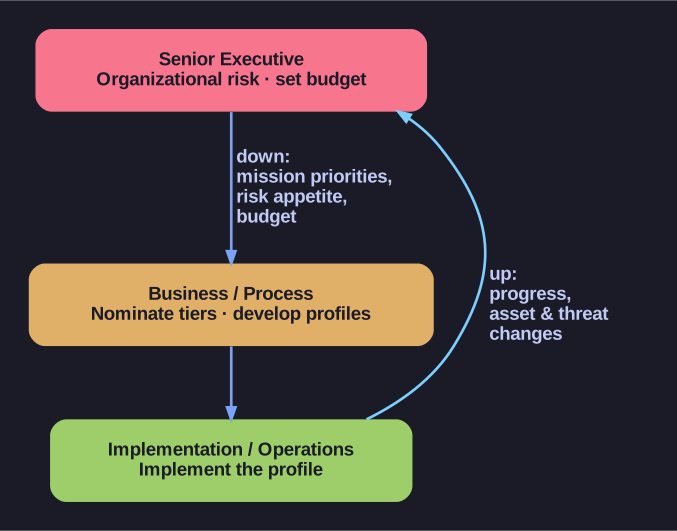
* Direction flows down (priorities, risk appetite, budget); progress and changes in risk flow back up — a closed loop. *
| Level | Focus | Actions |
|---|---|---|
| Senior Executive | Organizational risk | Express mission priorities, approve Tier selection, direct risk decisions, set budget |
| Business / Process | Critical-infrastructure risk management | Nominate Implementation Tiers, develop Profiles, allocate budget |
| Implementation / Operations | Securing critical infrastructure | Implement the Profile |
Information flows down as mission priority, risk appetite, and budget — and up as implementation progress and changes in assets, vulnerabilities, and threats, which update the executive view of current and future risk. Both internal and supply-chain risk feed the loop.
Why it matters: security fails most often at the seams between levels — executives set risk appetite nobody operationalizes, or ops teams fix risks leadership never hears about. The CSF gives each level a defined artifact (Tier, Profile, implementation) and forces the conversation.