How does the SIM (UICC) in LTE differ from a 2G SIM, and why are 2G SIMs forbidden on LTE?
The LTE UICC is a hardware store for the pre-shared key K and the IMSI, accessed only through a restricted API and performing the crypto on-card. Per 3GPP TS 33.401 §6.1.1, access to E-UTRAN with a 2G SIM or a 2G-COMP UICC application must not be granted.
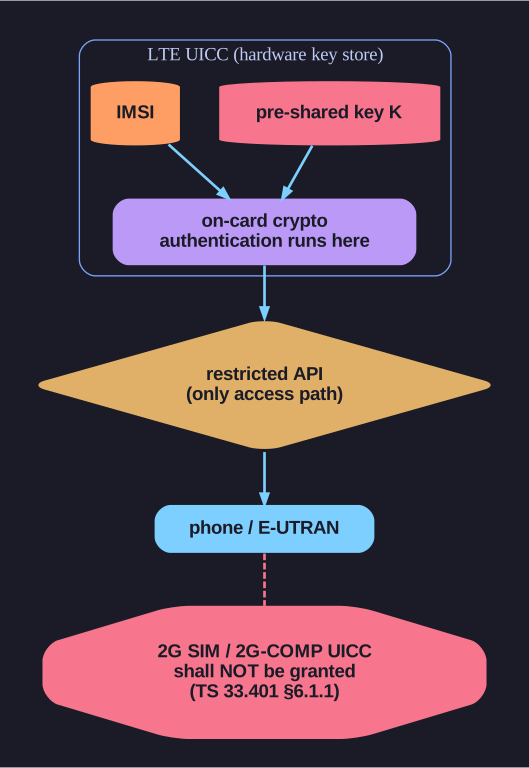
* The LTE UICC as a hardware key store; 2G SIMs are refused. *
The LTE UICC:
- Hardware storage for confidential information: the pre-shared key K and the IMSI
- Access to the UICC is only via a restricted API
- The card performs the cryptographic operations for authentication itself (the key never leaves the card)
The 2G ban (3GPP TS 33.401 – 6.1.1):
Access to E-UTRAN with a 2G SIM card, or a SIM application on a UICC using the 2G COMP method, shall not be granted.
Why this rule exists: everything from the GSM-attacks card — COMP128's broken key derivation, the 54-bit key, side-channel extraction — makes a 2G SIM a liability. LTE simply refuses to bootstrap its security from that weak foundation. The pre-shared key K and the modern AKA procedure replace COMP128/Ki.
Tip: This single spec line is the clearest statement of "LTE learned from GSM's mistakes" — the old credential is not just deprecated, it's actively rejected.
Go deeper:
 SIM card (Wikipedia) — the UICC as hardware key store: Ki/K never leaves the card, and how that differs from a plain 2G SIM.