Quiz Entry - updated: 2026.07.30
How does token-based (JWT) authentication differ from server-side sessions?
A session keeps the state on the server and gives the client only an opaque ID; a JWT puts the (signed) state inside the token itself, so the server trusts it by re-checking the signature and stores nothing — stateless vs stateful.
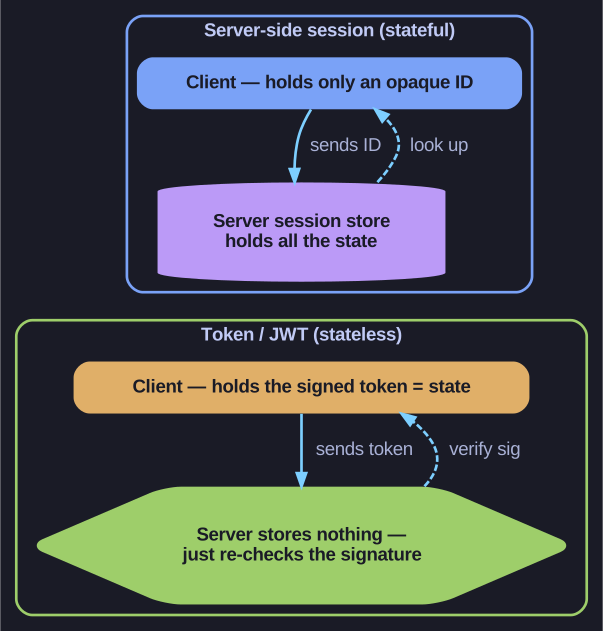
* Where the state lives is the whole difference: server store (session) versus inside the signed token (JWT). *
| Dimension | Server-side session | Token (JWT) |
|---|---|---|
| Where state lives | On the server; client holds only a random ID | Inside the token the client holds |
| Server memory | Must store every active session | Stateless — nothing stored |
| Trust mechanism | Look up the ID in the session store | Re-verify the token's signature |
| Revoke / logout | Delete the session server-side — instant | Hard — a valid token works until it expires (needs short lifetimes or a blocklist) |
| Scale across servers | Needs shared or sticky session storage | Any server holding the key can validate it |
The core trade-off: sessions are easy to revoke but need server-side storage; JWTs are stateless and scale easily but are hard to revoke. That one difference — statelessness — is why JWTs are popular for APIs and multi-service backends, and also why logout and token theft are harder to handle than with sessions.
Go deeper:
 JSON Web Token (Wikipedia) — token structure and how stateless token auth compares with server-side sessions.