Quiz Entry - updated: 2026.07.30
How is DNS organized hierarchically?
DNS is an inverted tree: root at the top, then top-level domains (.com, .org, .edu), then second-level domains and subdomains; each server owns only its zone and forwards requests outside it.
DNS Hierarchy:
DNS uses a hierarchical system to create a database for name resolution.
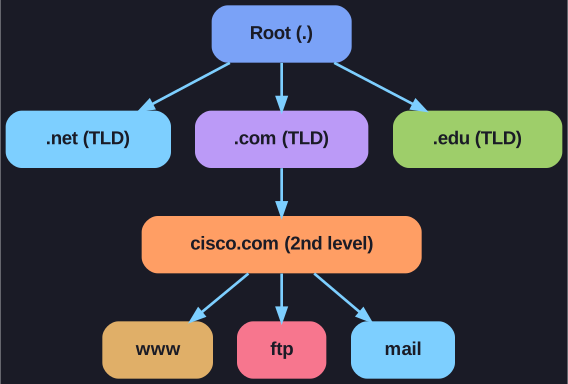
* An inverted tree: root, then TLDs, then second-level domains, then subdomains. *
Structure (top to bottom):
        Root Level Domain (.)
               │
    ┌──────────┼──────────┐
    │          │          │
  .net       .com       .edu    ← Top-Level Domains (TLDs)
    │          │
    │     cisco.com             ← Second Level Domain
    │          │
    │    ┌─────┼─────┐
    │    │     │     │
    │   www   ftp   mail        ← Subdomains
Top-Level Domain Examples:
- .com - Business or industry
- .org - Non-profit organization
- .edu - Education
- .au - Australia (country code)
Key characteristics:
- Each DNS server maintains a specific database file
- Each server only responsible for managing name-to-IP mappings for its portion of the structure
- When a DNS server receives a request outside its zone, it forwards the request to another DNS server
Go deeper:
-
 Domain Name System (Wikipedia) — the distributed tree and how authority is delegated by zone.
 -
Name server (Wikipedia) — authoritative servers vs recursive resolvers in the hierarchy.