How is the 5G base station (gNodeB) split into RU, DU, and CU, and what is the "functional split"?
The gNodeB is split into three components — Radio Unit (RU, signal processing), Distributed Unit (DU, signal shaping & radio cooperation), and Central Unit (CU, monitoring & control of the radio). The functional split means these can be separated by functionality and deployed flexibly — e.g. one CU centralising many distributed RU+DU cells.
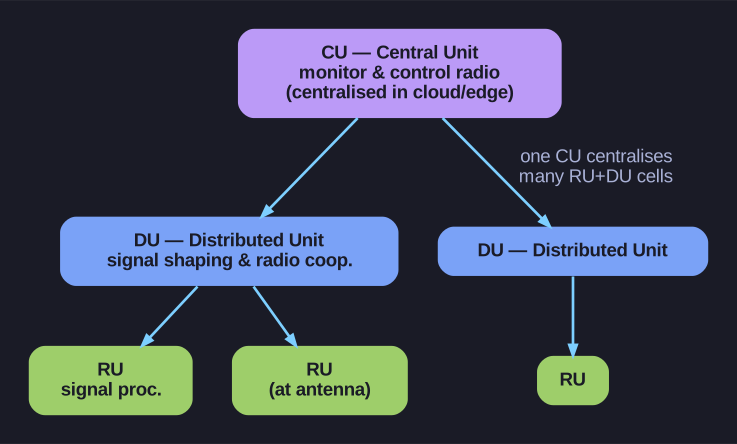
* Functional split: one CU centralises many RU+DU cells. *
The three components of the gNodeB (based on the 4G base station):
| Component | Role |
|---|---|
| RU (Radio Unit) | Signal processing — closest to the antenna |
| DU (Distributed Unit) | Signal shaping and radio cooperation |
| CU (Central Unit) | Monitoring and controlling the radio |
The functional split = dividing the base station by functionality, deployable in different configurations:
- Single cell: RU + DU + CU all together
- Cluster of cells: one CU centralised, serving several distributed RU + DU units
- Full functional split: CU centralised; DUs distributed; RUs at the antennas
Why split the base station? Centralising the CU (and even the DU) into a cloud/edge data centre while leaving only lightweight RUs at the masts means:
- the dense small-cell sites become cheap, simple radio heads
- intelligence is pooled and can coordinate across many cells
- it supports the lean, low-latency design 5G needs
Tip: RU = radio, DU = distributed processing, CU = central control. The functional split is what lets 5G deploy thousands of small cells economically — most of the brains live centrally, only the radio sits on the mast.
Go deeper:
 Where to split between CU and DU (ShareTechnote) — the F1 interface, the preferred PDCP/RLC split point, and the trade-offs (latency, fronthaul, vendor responsibility) that decide where to cut the stack — the engineering detail behind the functional split.
- 5G NR (Wikipedia) — the new radio interface and the gNB overview (and the carousel's diagram source for this card).