How is the root bridge elected in STP (Spanning Tree Protocol)?
The switch with the lowest Bridge ID (BID) becomes the root bridge, elected through BPDU (Bridge Protocol Data Unit) exchange.
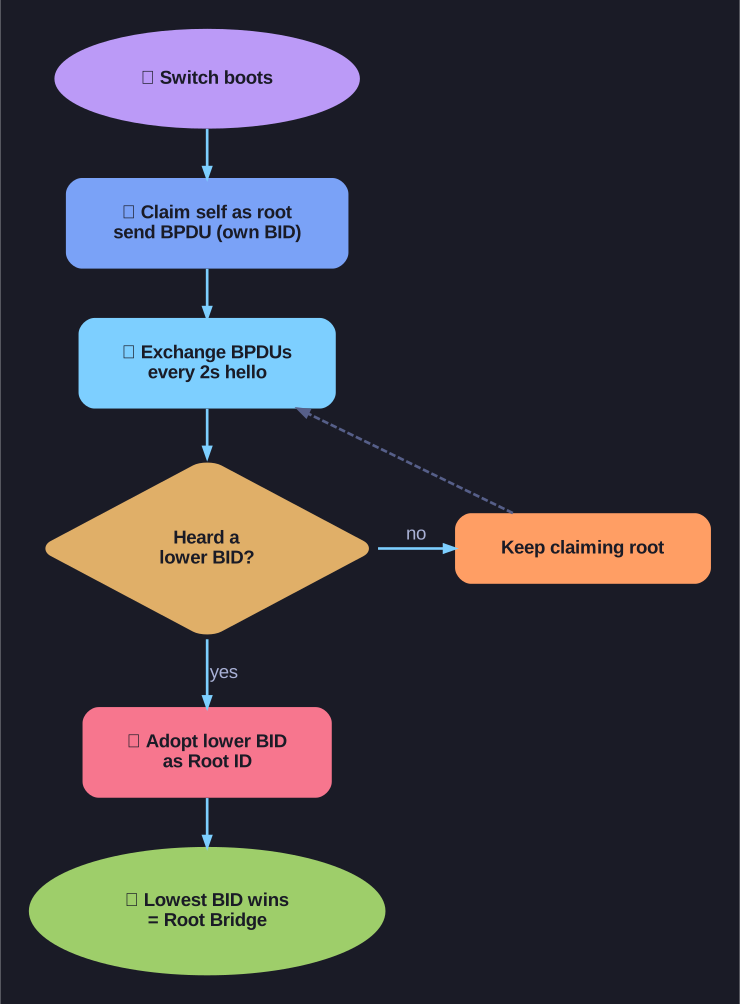
* Root-bridge election by lowest BID. *
Election process:
- When a switch boots, it assumes it is the root bridge and sends BPDUs with its own BID as the Root ID
- BPDUs are sent every 2 seconds (default hello timer)
- When a switch receives a BPDU with a lower BID, it updates its Root ID and stops claiming to be the root
- Eventually, all switches agree on the one with the lowest BID
What if all switches have the same priority? This is common since the default priority is 32768 for all Cisco switches. When priorities are equal (all showing 32769 for VLAN (Virtual Local Area Network) 1), the MAC (Media Access Control) address becomes the deciding factor — the switch with the lowest hexadecimal MAC address wins.
Best practice: Don't leave root bridge selection to chance. Manually configure the desired root bridge with a lower priority value (e.g., spanning-tree vlan 1 root primary sets priority to 24576).
Go deeper:
 How Spanning-Tree works (NetworkAcademy.IO) — every switch first claims root, then yields to the lowest BID via BPDU exchange.