How old is the concept of a lock and key, and what was the Egyptian pin-tumbler ancestor of the modern lock?
Locks predate writing — the Egyptian Fallriegelschloss is dated to around 4000 years ago, and it already used the same pin-and-bolt principle that powers your front door today.
The Egyptian "drop-bolt" lock:
- A wooden bolt slides through staples in the door.
- Holes in the top of the bolt hold loose pins that drop down (gravity-driven) into matching holes in the housing → bolt is locked.
- The key is a wooden stick with prongs matching the pin pattern — insert it from below, push the pins up out of the bolt, and slide the bolt sideways.
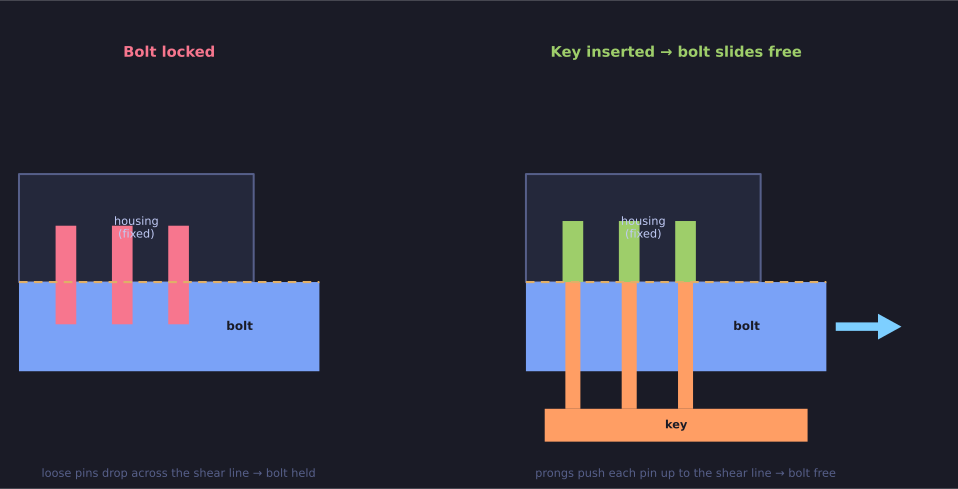
* Locked (pins dropped across the shear line) vs. key inserted (prongs lift the pins to the shear line, bolt slides free). *
Why this matters historically:
The Egyptian design contains the two essential ideas every modern pin-tumbler still uses:
- A shear line — a boundary that pins must clear for the bolt to move
- A coded key — the only object that lifts each pin to the right height
The oldest physical lock fragments archaeologists have recovered date to ~722 BC (Khorsabad, Assyria). The principle is older than the wheel-driven gears of medieval Europe.
Tip: When someone says "Yale invented the pin-tumbler in 1848," that's a half-truth — Yale invented the modern compact metal cylinder. The mechanism itself is 4 millennia old.
Go deeper:
 Lock (security device) — History — traces the line from the Egyptian wooden pin lock through Roman warded locks to Linus Yale's 1861 pin tumbler.