In Haesun Moon's Dialogue Orientation Quadrant (DOQ), what are the four quadrants and which ones does solution-focused dialogue favour?
Two axes (past↔future, positive↔negative) make four quadrants; solution-focus steers talk into the two positive ones — resourceful past and desired future.
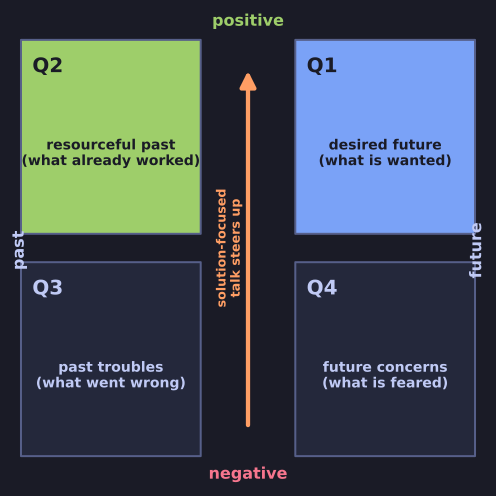
* Moon's Dialogue Orientation Quadrant: time × valence; solution-focused talk steers up into the resourceful past (Q2) and desired future (Q1). *
The DOQ ("communication matrix") maps any conversation on two dimensions — time (past vs future) and valence (positive vs negative):
| Positive | Negative | |
|---|---|---|
| Past | Q2 — resourceful past (what already worked) | Q3 — past troubles (what went wrong) |
| Future | Q1 — desired future (what's wanted) | Q4 — future concerns (what's feared) |
Problem talk gravitates to Q3 (past troubles) and Q4 (future worries). Solution-focused dialogue deliberately moves the conversation up into Q1 (desired future) and Q2 (resourceful past) — drawing on strengths that already exist and on the future the person wants to build. The grid is a handy live check: which quadrant is this conversation sitting in right now?
Tip: When a talk gets stuck, ask a question that lifts it into Q1 or Q2.