In the responsibility model, what can fill each of the four roles — subject, object, relation, and instance?
Subjects are agents (people, firms), objects are what's at stake (actions, omissions, consequences), the relation has several axes (retrospective/prospective, direct/indirect…), and the instance is an external or internal authority.
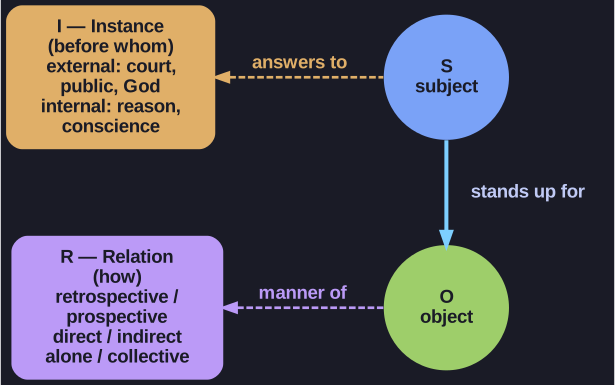
* Responsibility unpacked: a Subject stands up for an Object, in some Relation (how), answerable to an Instance (before whom). *
This fleshes out the bare "who / for what / how / before whom" with the range each role can take:
| Role | Examples of what fills it |
|---|---|
| Subject (S) — bearer | leadership, employees, the company, consumers, investors, politicians |
| Object (O) — what it's for | tasks, actions, omissions, decisions, consequences, addressees, states of affairs, goods, values |
| Relation (R) — how | retrospective (for a past action) vs prospective (for tasks ahead); direct/indirect; alone/collective; partial/whole |
| Instance (I) — before whom | external: court, the public, shareholders, God; internal: reason, conscience |
Two distinctions are especially worth holding onto. Omissions count as objects — you can be responsible for what you failed to do, not just what you did. And the instance can be internal: conscience and reason hold you to account even when no court or public ever will.
Tip: Retrospective = "answer for what you did"; prospective = "look after what's entrusted to you." The same person can be both at once.