PETs sound important in theory. What do they actually look like in practice? What are the main categories?
PETs (Privacy-Enhancing Technologies) fall into three classic categories: data minimization and masking, control and transparency, and anonymous usage.
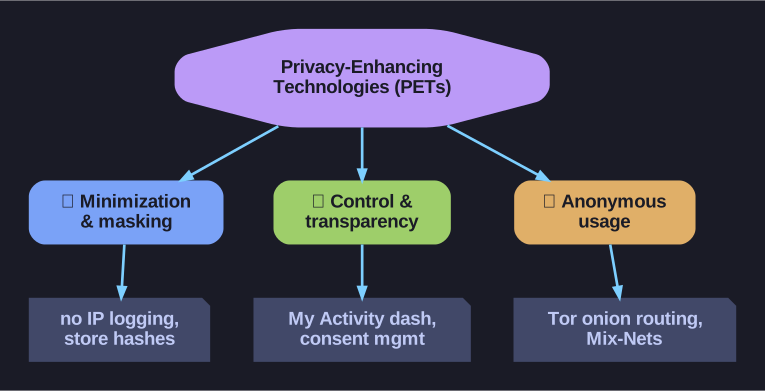
* The three classic PET categories with examples. *
1. Data Minimization and Masking. The simplest approach: collect less data in the first place. For example, logging web traffic without storing IP addresses, or storing only cryptographic hashes instead of raw personal data. If you don't have the data, you can't leak it.
2. Control and Transparency. Give users visibility into what's collected and let them manage it. Google's "My Activity" dashboard is one example. Consent management platforms like Usercentrics let websites handle cookie consent in a structured way. The key idea is that users should be able to see, control, and delete their data.
3. Anonymous Usage. Technologies that make users fundamentally untraceable. TOR uses onion routing to bounce traffic through multiple relays so no single node knows both the sender and the destination. Mix-Nets shuffle messages from many users together, making it impossible to link a specific message to a specific sender.
Go deeper:
 Onion routing (Wikipedia) — how Tor's layered encryption delivers the "anonymous usage" category.