Using the idea of learning as "laying tracks," why can getting instant answers from an AI undermine real learning?
Learning means leaving and following a trace that connects new knowledge to what you already know — jumping straight from question to answer skips that trace, so nothing gets wired in.
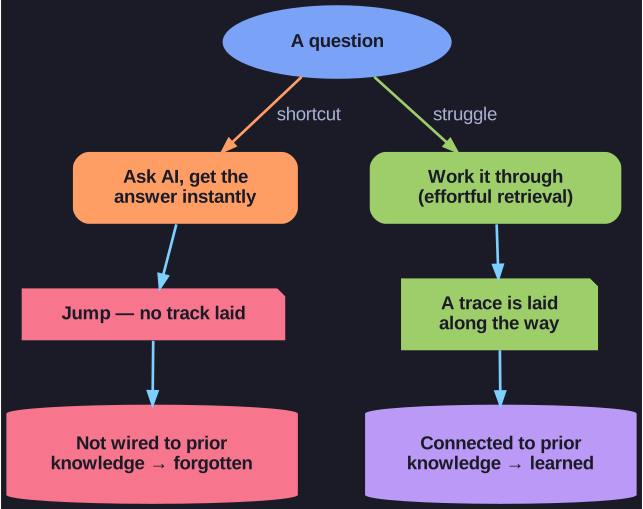
* Instant answers jump past the trace; effortful working-through lays the track that connects new knowledge to old. *
The German word lernen ("to learn") is etymologically tied to following a track or trail — laists "track", the root *lais- "track, furrow". The image is that learning leaves traces: in your memory (so you can retrace the path later) and in the world.
That image explains the risk with GenAI:
- You ask a question and immediately receive the answer — a jump straight from question to result.
- No "track" is laid along the way: no struggle, no detours, no working-through.
- Because nothing was traced, the answer doesn't get connected to your existing network of knowledge — so it isn't really learned, just retrieved and forgotten.
The struggle people try to skip is the learning. Effortful retrieval and working a problem through are what build durable, connected memory.
Tip: This is why re-reading or being handed a solution feels easy but teaches little, while struggling to recall or derive it (even imperfectly) sticks — the effort is the mechanism, not an obstacle to it.
Go deeper:
 Wikipedia — Testing effect (retrieval practice) — the evidence that effortful recall, not re-reading, is what builds durable memory.