Quiz Entry - updated: 2026.07.30
Walk through the Toulmin scheme on a descriptive example: "Harry is a British citizen."
Data "Harry was born in Bermuda" supports the claim "Harry is a British citizen" via the warrant "anyone born in Bermuda gets British citizenship," backed by "British law says so."
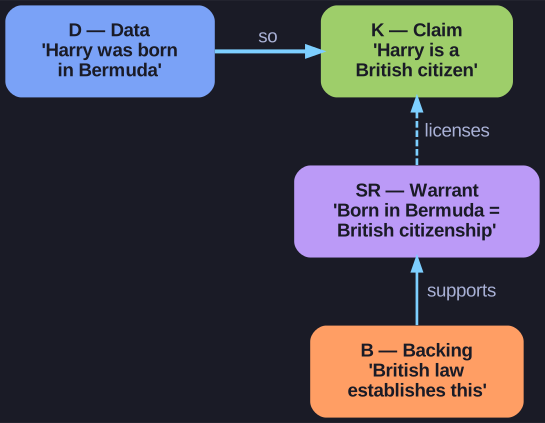
* A descriptive Toulmin argument — the warrant and claim are about facts. *
A descriptive argument is about what is the case (truth). Reconstructing the dialogue:
- Claim (K): "Harry is a British citizen" — an empirical-descriptive claim about a fact in the world.
- Challenge: "What do you base that on?" →
- Data (D): "Harry was born in Bermuda."
- Challenge: "How do you get from that fact to your claim?" →
- Warrant (SR): "Whoever is born in Bermuda receives British citizenship" — an if-then rule.
- Challenge: "Why should that rule hold?" →
- Backing (B): "British law establishes this."
Tip: In a descriptive argument the warrant and claim are about facts. Contrast this with a normative argument, where both the warrant and the claim must themselves be normative ("ought" statements) — you can't reach an "ought" claim through a purely factual warrant.
Go deeper:
 Stephen Toulmin — the model of argument (Wikipedia) — data, warrant and backing behind a factual claim.