What are comb picks (Kamm-Pick) and shims (Shim-Plättchen), and why are they categorized as bypass rather than picking?
Both attack the lock by skipping the shear line entirely — they don't manipulate pins to the right height; they go around the mechanism. That's why they're "Umgehungstechnik" (bypass), not "Aufsperren" (picking).
Comb pick (Kamm-Pick):
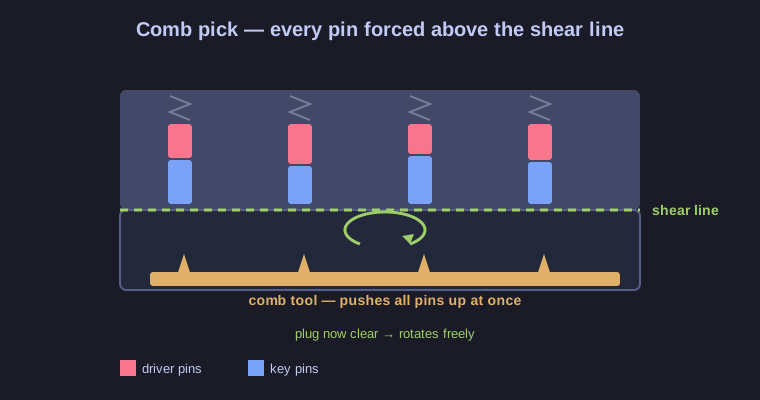
* Comb pick — every pin forced above the shear line, so the plug rotates freely. *
Instead of setting each pin individually, the comb pushes every pin all the way up past the housing's pin chambers. The plug then has no obstructions at all and rotates freely. Some cheap locks open in <1 second this way.
Why comb picks usually fail today:
- Anti-comb pins: an extra-long driver pin would extend below the shear line if pushed too far → blocks rotation. Comb pick can't lift it.
- Restricted keyways: narrow profile blocks the comb's blade from reaching all pins.
Shim (Shim-Plättchen):
A thin metal strip (made from beer-can aluminum in classic tutorials) inserted between the shackle and the lock body of a padlock. The shim slides past the latch's locking notch, pushing the latch out of the way → shackle releases.
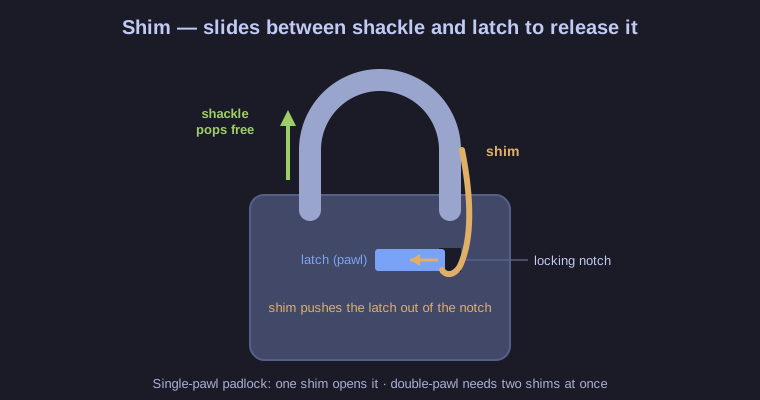
* Shim — slides between shackle and latch, pushing the latch out of the notch so the shackle releases. *
Padlock-specific weakness:
Cheap padlocks have single-pawl locking — one notch on the shackle, one latch. A single shim in the right slot opens the entire lock. Premium padlocks use double-pawl locking (two notches, two latches) — one shim is not enough; you need two simultaneously, which is much harder.
Why "bypass" not "picking":
Picking interacts with the lock's design — it manipulates the intended security mechanism. Bypass routes around the security mechanism entirely. Defenders sometimes notice picking attempts (false starts, abandoned attempts), but bypass is often a one-shot success.
Tip: When buying a padlock, look for "double-bolt" or "double-pawl" specifications. Test by trying to wiggle the shackle — single-pawl locks have play in one direction; double-pawl locks have none.
Go deeper:
 Comb picks (Lock picking, Wikipedia) — comb picks push all pins above the shear line at once, defeating the lock without reading it.