Quiz Entry - updated: 2026.07.30
What are RFC 1918 private IPv4 addresses and why are they used?
RFC 1918 reserves 10.0.0.0/8, 172.16.0.0/12, and 192.168.0.0/16 for internal use; they are not globally routable and must be translated by NAT to reach the internet, conserving public addresses.
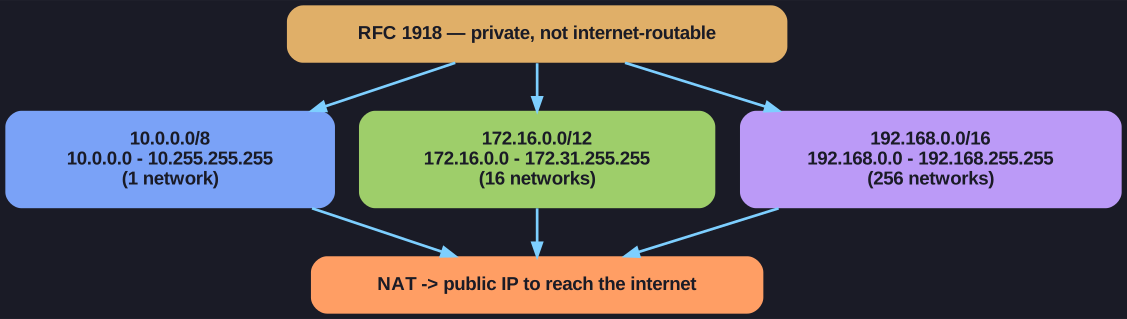
* The three private blocks are not internet-routable and must be translated by NAT. *
RFC 1918 Private Address Ranges:
| Class | Private Range | CIDR | # of Networks |
|---|---|---|---|
| A | 10.0.0.0 - 10.255.255.255 | 10.0.0.0/8 | 1 |
| B | 172.16.0.0 - 172.31.255.255 | 172.16.0.0/12 | 16 |
| C | 192.168.0.0 - 192.168.255.255 | 192.168.0.0/16 | 256 |
Why private addresses exist:
- IPv4 address exhaustion
- Conserve public IPv4 addresses
- NOT routable on the Internet - must use NAT
NAT (Network Address Translation):
- Translates private addresses to public addresses
- Allows multiple internal hosts to share one public IP
- Required for private networks to access the Internet
Key insight: Any device with a private IP address MUST go through NAT to reach the Internet.
Go deeper:
 RFC 1918 — Address Allocation for Private Internets (IETF) — the primary source defining the three reserved blocks.
- Private network (Wikipedia) — the full RFC 1918 table and how private addressing is used.
- Network address translation (Wikipedia) — how NAT maps private addresses to a public one.