Quiz Entry - updated: 2026.07.30
What are RS and RA messages and how do they work in IPv6?
RS (ICMPv6 type 133): a host asks "are there any routers?" RA (type 134): a router advertises the prefix, default gateway, and DHCP flags — sent periodically and in reply to an RS.
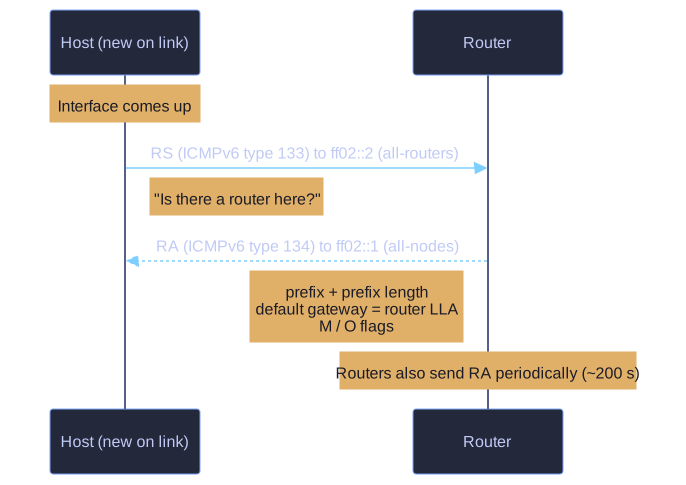
* The Router Solicitation / Router Advertisement exchange and what the RA carries. *
Router Solicitation (RS) and Router Advertisement (RA):
| Message | Direction | ICMPv6 Type | Purpose |
|---|---|---|---|
| RS | Host → Router | 133 | "Is there a router on this link?" |
| RA | Router → Hosts | 134 | "I'm a router, here's network info" |
Router Solicitation (RS):
- Sent by hosts when they come online
- Destination: ff02::2 (all-routers multicast)
- Requests immediate RA response
Router Advertisement (RA):
- Sent by routers periodically (default: every 200 seconds)
- Also sent in response to RS
- Destination: ff02::1 (all-nodes multicast)
RA Message Contains:
- Network prefix and prefix length
- Default gateway (router's LLA)
- Flags indicating DHCP usage:
- M flag (Managed): Use DHCPv6 for address
- O flag (Other): Use DHCPv6 for other info (DNS)
Prerequisite: Router must have ipv6 unicast-routing enabled to send RAs.
Go deeper:
 RFC 4861 §4.1–4.2 — Router Solicitation / Advertisement — the authoritative message formats and behaviour for RS (133) and RA (134).
- Neighbor Discovery Protocol (Wikipedia) — RS/RA in the wider NDP context alongside NS/NA, with the ICMPv6 type numbers.