What are Shannon's two fundamental properties for secure ciphers: Confusion and Diffusion?
Confusion makes the relationship between key and ciphertext as complex as possible; Diffusion spreads the influence of each plaintext bit across many ciphertext bits.
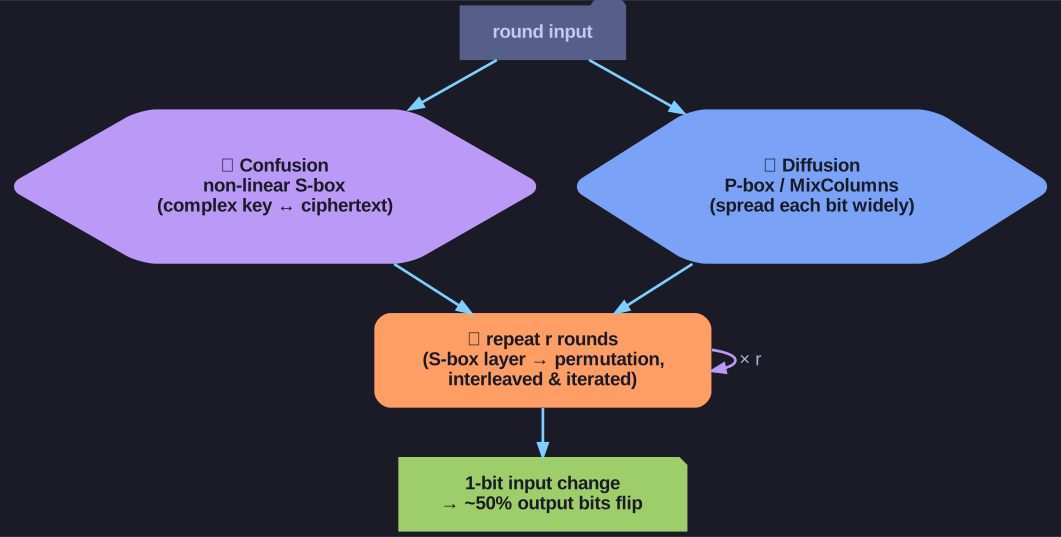
* Confusion (S-boxes) and diffusion (mixing), interleaved and repeated over many rounds. *
Neither property is enough on its own: diffusion without confusion stays linear and is solvable with algebra, while confusion without diffusion leaves the plaintext's statistical structure intact. That is why real ciphers interleave the two and repeat them over many rounds — each round's confusion is then smeared across the whole block by the next round's diffusion.
Confusion:
- Each ciphertext bit should depend on many key bits in a complex, non-linear way
- Achieved primarily through S-boxes (substitution boxes) — non-linear lookup tables
- Purpose: prevents the attacker from deducing the key even if they know some plaintext-ciphertext pairs
Diffusion:
- Each ciphertext bit should depend on many plaintext bits
- Achieved through permutations, shifts, and mixing operations (P-boxes, MixColumns, etc.)
- Purpose: hides statistical patterns in the plaintext (e.g., letter frequencies)
Together: Confusion and diffusion, applied over multiple rounds, create a cipher where:
- Changing one bit of the key changes ~50% of ciphertext bits
- Changing one bit of plaintext changes ~50% of ciphertext bits
Tip: "Confusion = key complexity (S-boxes), Diffusion = bit spreading (permutations)" — these are the two pillars Claude Shannon identified in 1949.
Go deeper:
 Confusion and diffusion (Wikipedia) — Shannon's 1945 design principles and how ciphers realise them.