What are single-hop and multi-hop wireless networks, and what are the four combinations?
Single-hop means the device reaches its destination (or a base station) in one wireless jump. Multi-hop means the signal must pass through intermediate wireless nodes.
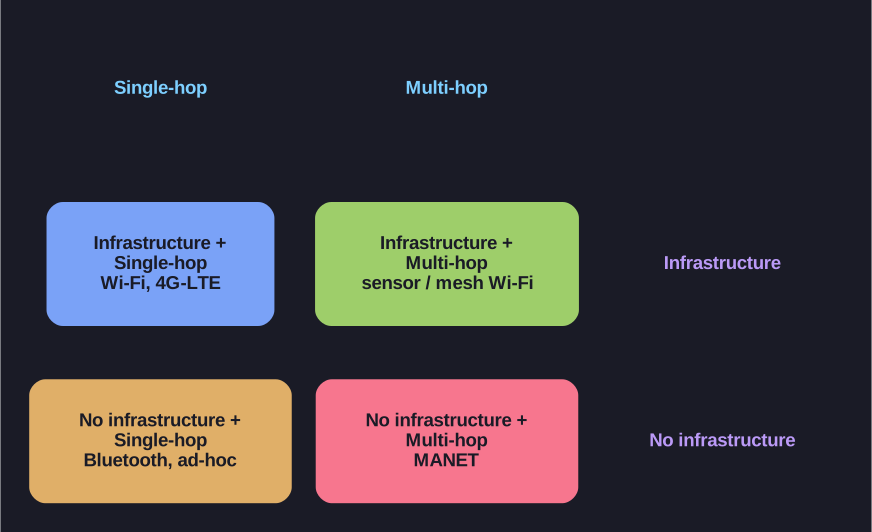
* The four single-hop / multi-hop x infrastructure combinations. *
| Single-Hop | Multi-Hop | |
|---|---|---|
| Infrastructure-based | Device connects directly to a base station that provides internet access. This is the most common type: Wi-Fi (802.11), 4G-LTE. | Device must relay through other wireless nodes to reach a base station. Example: wireless sensor networks, mesh Wi-Fi systems. |
| No Infrastructure | No base station, no internet. Devices communicate directly with neighbors. One node may coordinate transmissions. Example: Bluetooth, 802.11 ad-hoc mode. | No base station. Nodes relay traffic through intermediate nodes to reach devices beyond their range. Example: MANET (Mobile Ad-hoc Network). |
The key insight: The vast majority of our daily wireless communication uses single-hop, infrastructure-based networks. You connect to one access point or cell tower, and you're done.
MANET example: Imagine cars on a highway sharing traffic jam information. Car A tells Car B, Car B tells Car C, and so on. No cell tower needed, just vehicles relaying data to each other. This is a multi-hop, infrastructure-less mobile ad-hoc network.
Memory anchor: More hops means more complexity, more latency, and more security challenges, because each hop is another point where packets can be delayed, dropped, or manipulated.
Go deeper:
 Mobile ad hoc network (Wikipedia) — how a MANET keeps a route alive across multiple infrastructure-less hops as the nodes themselves move.
- Vehicular ad hoc network (Wikipedia) — the cars-relaying-traffic-info example as a real standard (V2V), and why multi-hop matters there.