Quiz Entry - updated: 2026.07.30
What are the basic troubleshooting steps for network problems?
1) Identify the problem, 2) establish a theory of probable causes, 3) test the theory, 4) establish and implement a plan of action, 5) verify the solution and add preventive measures, 6) document findings, actions, and outcomes.
Basic Troubleshooting Approaches:
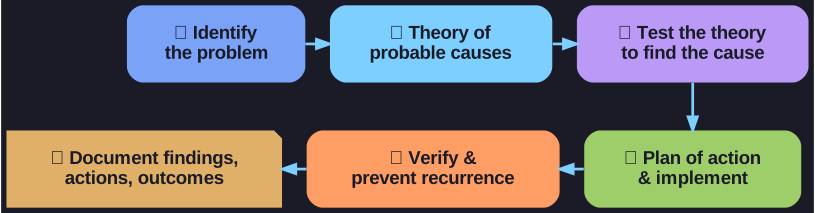
* The six-step cycle: identify → theory → test → plan & implement → verify → document. *
A systematic troubleshooting process follows these steps:
| Step | Action |
|---|---|
| 1. Identify the Problem | First step in troubleshooting. Although tools can be used, conversation with the user is often very helpful. |
| 2. Establish a Theory of Probable Causes | After identifying the problem, establish a theory of probable causes. This yields more than a few probable causes. |
| 3. Test the Theory to Determine Cause | Based on probable causes, test your theories to determine which one is the cause. A technician may apply a quick fix. If quick fix doesn't work, you might need research. |
| 4. Establish a Plan of Action and Implement | After determining exact cause, establish a plan of action to resolve the problem and implement the solution. |
| 5. Verify Solution and Implement Preventive Measures | After correcting the problem, verify full functionality. Implement preventive measures if applicable. |
| 6. Document Findings, Actions, and Outcomes | In the final step, document your findings, actions, and outcomes. Very important for future reference. |
Go deeper:
 Wikipedia — Troubleshooting — the general logic of hypothesise-test-eliminate, including the half-splitting technique for narrowing a fault fast.