What are the components of the Toulmin argument scheme?
Data (D) → Claim (K), licensed by a Warrant (SR), which is itself supported by Backing (B), and limited by a Rebuttal/exception (A).
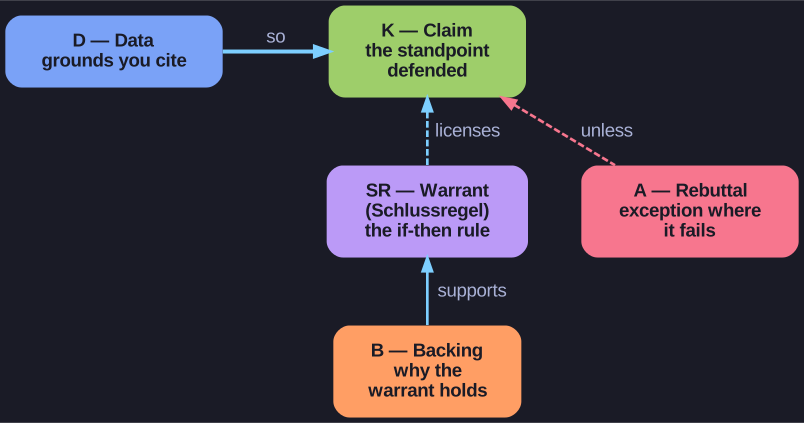
* Toulmin's scheme: data (D) supports the claim (K), licensed by a warrant (SR), itself backed by (B) and limited by a rebuttal (A). *
Stephen Toulmin's scheme expands the bare premise→conclusion link into the parts a real argument needs. Using the German labels from the scheme:
| Part | German label | The question it answers |
|---|---|---|
| Data (D) | Daten, Informationen | "What do you base that on?" |
| Claim / Conclusion (K) | Konklusion, Behauptung | (the standpoint being defended) |
| Warrant (SR) | Schlussregel, Prinzip | "How do you get from the data to the claim?" |
| Backing (B) | Begründung, Stützung | "Why should that warrant hold?" |
| Rebuttal (A) | Ausnahmebedingung | (the exceptional condition under which it wouldn't hold) |
The structure is a chain: Data → (via Warrant) → Claim, where the warrant is a general "if-then" rule licensing the step, the backing justifies the warrant itself, and the rebuttal marks when the inference can fail.
Tip: The warrant (SR) is the bridge people most often leave implicit. Data and claim are stated out loud; the rule connecting them is assumed — which is exactly where many arguments hide their weak point.
Go deeper:
 Stephen Toulmin — the model of argument (Wikipedia) — the six-part Toulmin model in full.