What are the five categories of obligated parties under the BÜPF (Art. 26–30)?
Telecom providers (Art. 26), providers of derived communication services (Art. 27), operators of internal telecom networks (Art. 28), parties giving access to a public network (Art. 29), and professional resellers of access cards (Art. 30).
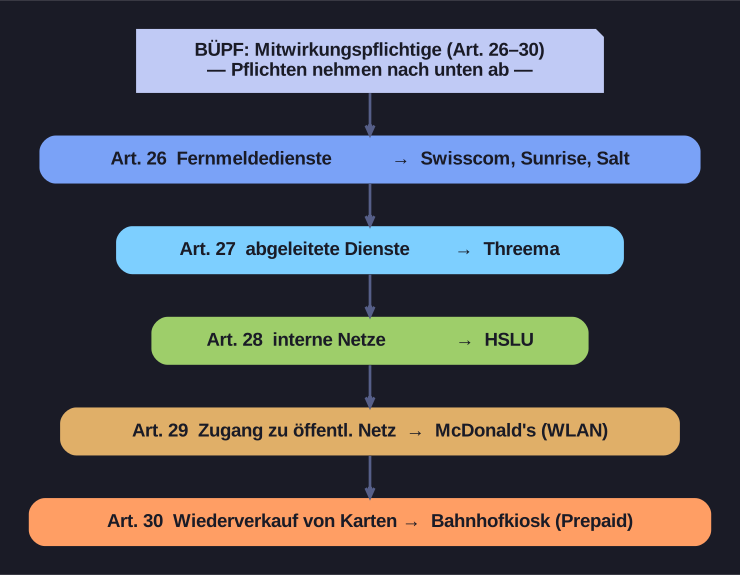
* Die fuenf Kategorien; die Pflichten nehmen mit der Netz-Entfernung ab. *
The five categories:
| Article | Category | Example |
|---|---|---|
| Art. 26 | Providers of telecom services (Fernmeldedienste) | Swisscom, Sunrise, Salt |
| Art. 27 | Providers of derived communication services | Threema (a messaging service) |
| Art. 28 | Operators of internal telecom networks | HSLU (a university campus network) |
| Art. 29 | Parties providing access to a public telecom network | McDonald's (offering Wi-Fi) |
| Art. 30 | Professional resellers of access cards | A Bahnhofskiosk selling prepaid SIM cards |
The logic of the gradation: obligations scale with how central the party is to the communication. A full telecom carrier (Art. 26) has the heaviest duties; a coffee-shop Wi-Fi provider (Art. 29) or a SIM reseller (Art. 30) has lighter, more specific ones.
Tip: The progression runs from "core carrier" → "over-the-top service" → "private network" → "access point" → "card reseller." Each step is one layer further from owning the actual network, and the obligations lighten accordingly.
Go deeper:
 Post & telecom surveillance — procedure (li.admin.ch) — how mandates reach the different obligated parties (full carriers down to access providers and resellers).