Quiz Entry - updated: 2026.07.30
What are the five STP (Spanning Tree Protocol) port states, and what does each one do?
Blocking, Listening, Learning, Forwarding, and Disabled — only Forwarding actually passes user traffic.
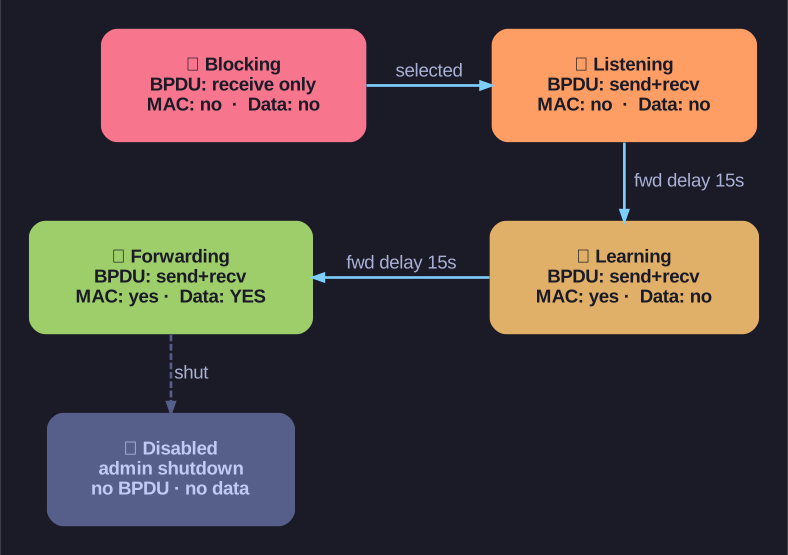
* The five STP port states and transitions. *
| Port State | BPDUs (Bridge Protocol Data Units) | MAC (Media Access Control) Table | Forwards Data | Duration |
|---|---|---|---|---|
| Blocking | Receive only | No update | No | Up to Max Age (20s) |
| Listening | Receive and send | No update | No | Forward Delay (15s) |
| Learning | Receive and send | Updating | No | Forward Delay (15s) |
| Forwarding | Receive and send | Updating | Yes | Stable state |
| Disabled | None | No update | No | Admin shutdown |
Transition sequence:
- Blocking → port starts here (or when STP determines it should not forward)
- Listening → participating in STP decisions, exchanging BPDUs, but not learning MACs
- Learning → now populating the MAC address table, but still not forwarding user data
- Forwarding → fully operational, forwarding frames
Why not jump straight to forwarding? If a port went directly from blocking to forwarding without knowing the full topology, it could temporarily create a loop. The listening and learning states give STP time to ensure the topology is stable.
Go deeper:
 Spanning Tree Protocol — port states (Wikipedia) — blocking/listening/learning/forwarding/disabled and why the intermediate states prevent transient loops.