What are the four categories of non-destructive overcoming (zerstörungsfreie Überwindung) of a lock?
"Non-destructive" means opening the lock while leaving it functional afterward — no broken parts, no traces visible to the naked eye. There are four distinct techniques.
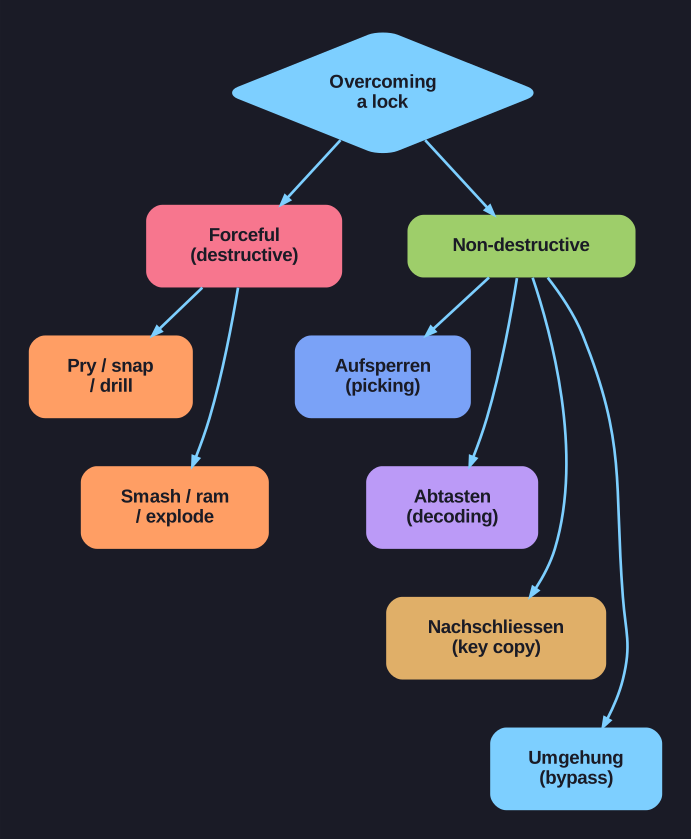
* Lock-attack taxonomy — destructive vs the four non-destructive categories. *
The four categories:
| Category | What it does | Example |
|---|---|---|
| Aufsperren (picking/lock-opening) | Manipulate the locking elements directly without the key | SPP, raking, bump keys, pick guns |
| Abtasten (decoding) | Measure the lock's internal pin heights, then make a working key | Sputnik decoder, Lishi 2-in-1, foil keys |
| Nachschliessen (key duplication / key-replication) | Obtain or duplicate a working key by other means | Photographing keys, 3D printing from photos, stolen master keys |
| Umgehungstechnik (bypass) | Skip the lock entirely — attack a weaker link | Comb pick, shim, window manipulation, knob over the door |
Why this distinction matters forensically:
The key phrase in the formal definition is "ohne dessen Funktionstüchtigkeit zu beeinträchtigen" — without affecting functionality. After a non-destructive entry:
- The door closes and locks normally.
- The owner's key still works.
- The owner may not realize anything happened until items are missing.
Forensic detection of non-destructive entry:
This is exactly what lock forensics (Forensik in Schlössern) is about: examining the lock under microscope for scratches on the pins (picking), flattened spring tips (decoding), or lateral wear (bypass tools). These are usually invisible to the naked eye.
Tip: From a defender's standpoint, non-destructive entry is the more dangerous threat — there's no smashed window to alert you. This is why many high-security cylinders include anti-pick pins (spool / serrated) and detection mechanisms like the Chubb detector.