What are the four physical effects that influence radio wave propagation?
Reflection, diffraction, shadowing, and scattering — each comes from a different interaction between the radio wave and an obstacle of a different size.
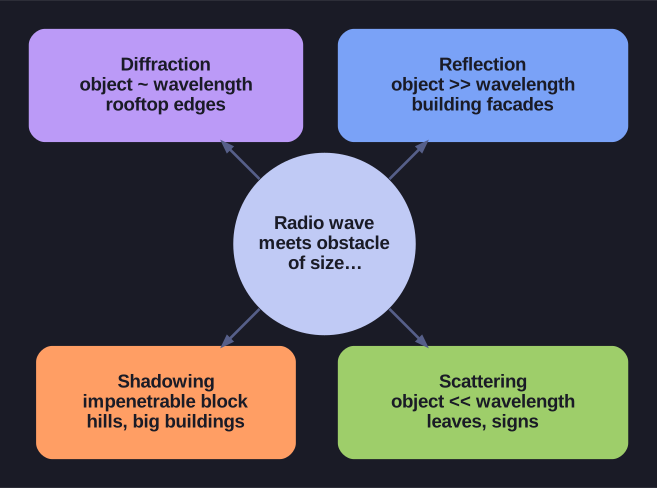
* Four propagation effects, by obstacle-size-to-wavelength ratio. *
| Effect | Cause | Example |
|---|---|---|
| Reflection | Signal bounces off objects much larger than its wavelength | Building facades, metal surfaces |
| Diffraction | Signal bends around objects roughly the size of its wavelength | Rooftop edges, corners of buildings |
| Shadowing | Signal is blocked by impenetrable obstacles in the line of sight | Hills, large buildings |
| Scattering | Signal disperses off objects smaller than its wavelength | Tree leaves, street signs, lamp posts |
These effects combine to create a complex, unpredictable signal environment. In urban areas, a receiver might get dozens of reflected copies of the same signal arriving from different directions at different times — this is the basis of multipath propagation.
Practical implication: This is why your phone signal can vary dramatically just by moving a few meters — you might step out of a shadow zone or into a spot where reflected signals cancel each other out.
Go deeper:
 Radio propagation (Wikipedia) — covers reflection, diffraction, scattering and absorption/shadowing and how each depends on obstacle size relative to wavelength.