Quiz Entry - updated: 2026.07.30
What are the four primary types of re-identification attacks?
Linkage, inference, similarity, and homogeneity attacks — each exploits a different weakness in anonymization.
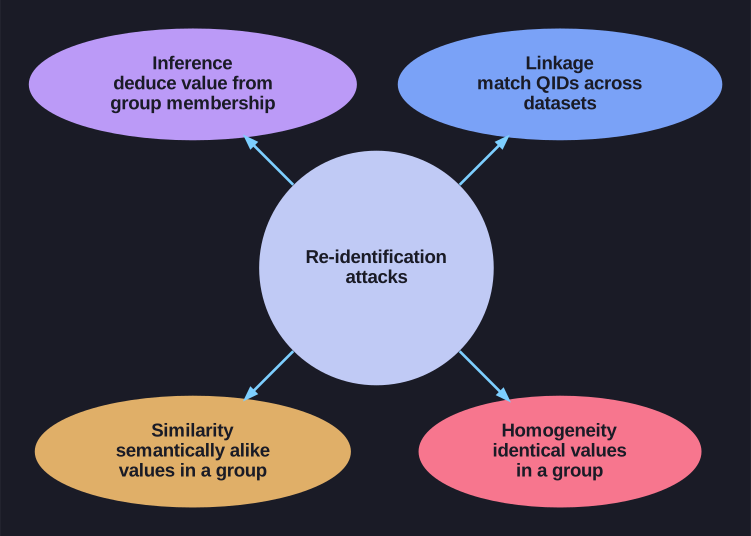
* The four re-identification attack types and what each exploits. *
| Attack | What it exploits |
|---|---|
| Linkage | Matching quasi-identifiers across datasets to re-attach identity |
| Inference | Deducing a sensitive attribute from group membership |
| Similarity | Semantically similar sensitive values within a group |
| Homogeneity | Identical sensitive values within a group |
Understanding which weakness each targets is what lets you pick the right countermeasure:
- Linkage → process the QIDs (Quasi-Identifiers) so each combination repeats — k-anonymity
- Homogeneity → force varied sensitive values per group — l-diversity
- Similarity / skew → align each group's distribution with the whole — t-closeness
- Everything (any inference) → add calibrated noise — differential privacy
Tip: Linkage attacks identity; the other three attack the secret even when identity stays hidden.
Go deeper:
 Data re-identification (Wikipedia) — catalogs real linkage/inference cases behind the taxonomy.